


The Federal Reserve’s Decision-Making at a Critical Juncture
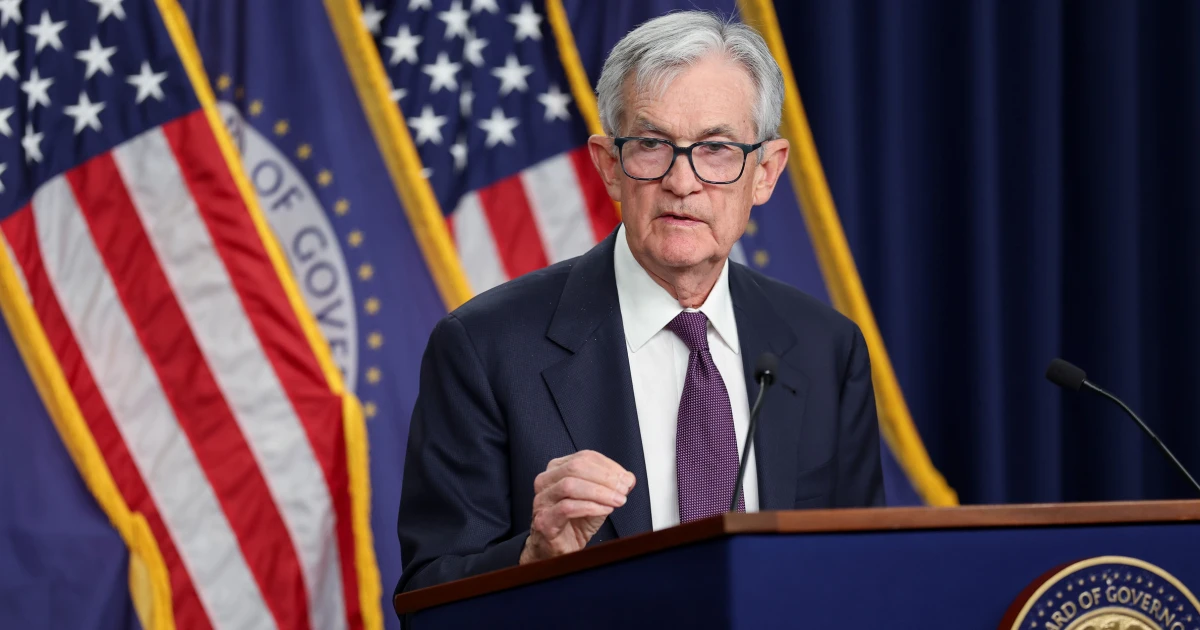
The Federal Reserve is poised to maintain its current interest rates during Wednesday’s meeting, which could be the final policy session for Chairman Jerome Powell at the helm of the world’s leading central bank.
Last week, the Justice Department concluded its criminal inquiry into Powell and the Fed, paving the way for Kevin Warsh, President Donald Trump’s nominee to succeed Powell, to advance in the Senate confirmation process.
The Senate Banking Committee plans to vote Wednesday morning to move Warsh’s nomination forward for consideration by the full Senate. Although Powell’s term as chair expires on May 15, he may remain at the Fed beyond this date, though he has not yet indicated his future intentions. Consequently, Wednesday’s meeting will likely be overshadowed by speculation regarding Powell’s next steps.
As chair of the Fed Board of Governors and president of the Federal Reserve, Powell’s dual roles carry significant weight. Even if he steps down as chair next month, his term as governor extends until January 2028, allowing for potential continued influence.
Market analysts, including Andrew Hollenhorst, Citigroup’s chief U.S. economist, express that Warsh’s expected transition may diminish the significance of Wednesday’s meeting for investors. He noted that with no updates to economic forecasts and an expectation for stable policy rates, the meeting may draw less attention than usual.
Despite this, the central bank, particularly Powell, still faces critical issues to address during this meeting and in the near future.
Economic Challenges Facing the Federal Reserve
The Federal Reserve’s rate-setting committee convenes against a backdrop of economic uncertainty, grappling with multiple prevailing challenges.
Diane Swonk, chief economist at KPMG, observed that ongoing uncertainties related to global conflicts, trade tariffs, and the effects of artificial intelligence on the economy complicate the Fed’s decisions. U.S. oil prices have surged nearly 70% this year due to geopolitical tensions, leading airlines to reduce flight schedules globally as jet fuel costs escalate. March saw inflation increase by 0.9% from February, marking an annual rate exceeding 3.3%.
According to Deutsche Bank economists, the implications of the Middle Eastern conflict are expected to weigh heavily on Powell’s considerations. They anticipate he will communicate the Fed’s lack of clarity regarding the war’s direct economic consequences and its influence on monetary policy.
Labor market conditions present an additional layer of complexity for Fed leaders. Economists at BBVA indicated that job market indicators remain inconsistent, depicting a generally stable but fragile economic landscape. The U.S. added 160,000 jobs in January but faced job losses of 133,000 in February, before recovering with 178,000 jobs added in March.
Swonk highlighted that the absence of straightforward policy options during these uncertain times necessitates flexibility, underscoring the anxieties that characterize the current economic climate.
The Future of Jerome Powell
Whether Powell will stay on the board beyond his chairmanship may largely depend on the resolution of the politically charged investigation into the Fed.
This investigation, initiated by the U.S. Attorney for the District of Columbia, centered on renovations at the Fed’s Washington headquarters. In his latest press conference, Powell stated he would remain with the Federal Reserve Board until the investigation concludes transparently.
The investigation’s initiation sparked significant backlash from lawmakers, with North Carolina Republican Thom Tillis effectively halting Trump’s nomination of Warsh until the inquiry reached closure.
On Friday, U.S. Attorney Jeanine Pirro announced the investigation’s conclusion, shifting oversight to the Federal Reserve’s inspector general, who has previously examined the renovation plans and found no misconduct.
After the announcement, Tillis pledged to lift his blockade on Fed nominees, provided he receives assurances from the Justice Department regarding the independent functioning of the Fed. However, Pirro cautioned that the possibility remains for reopening the investigation if warranted.
Amid ongoing discussions about the investigation’s status, White House Press Secretary Caroline Levitt indicated that the case is not definitively closed, a sentiment echoed by President Trump. Consequently, UBS economists predict that Powell may continue in his role for an extended period, contingent on how the investigation unfolds.
If that occurs, it would mark the first instance since Marriner Eccles, who served as Fed chairman from 1934 to 1948, of a chairman holding the position for an extended duration.
