


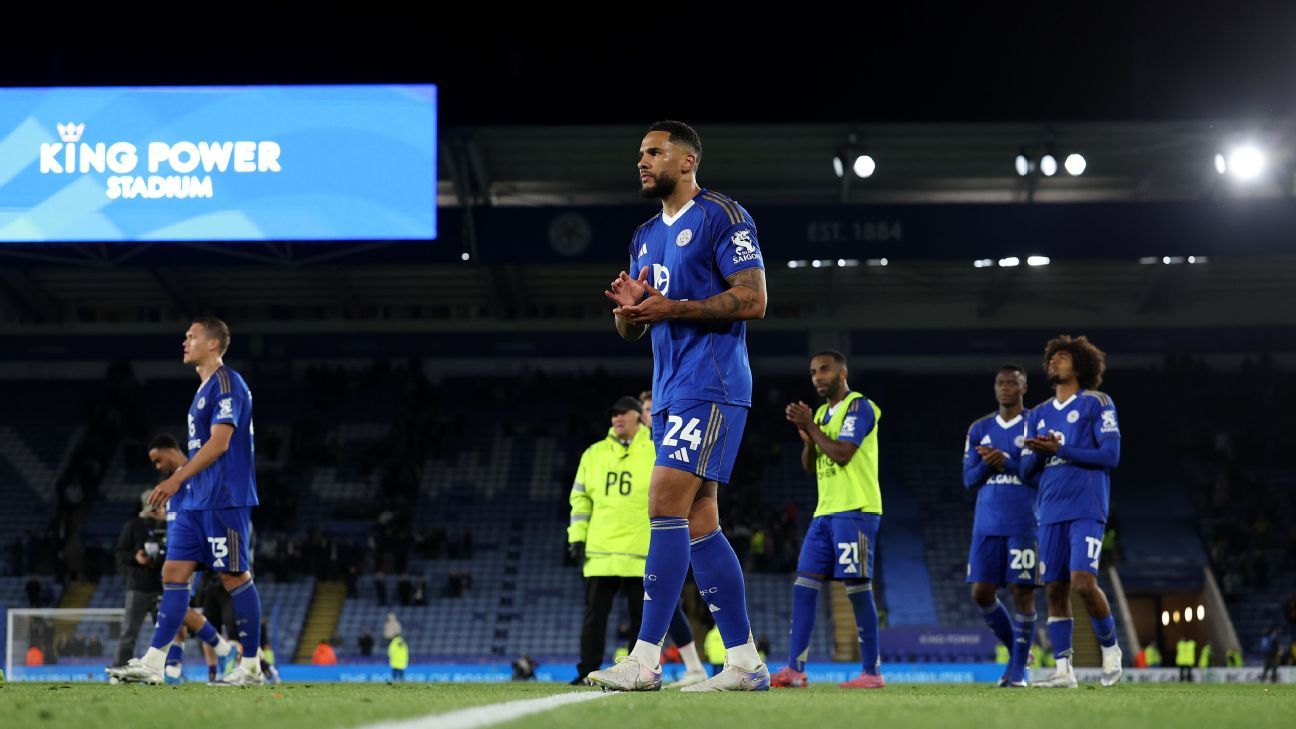
Just a decade after Leicester City celebrated their remarkable Premier League championship victory, fans were left in despair as they witnessed their club’s relegation to League One. Following a 2-2 draw at home against Hull City, supporters voiced their frustrations by demanding that the club’s owner leave and booing the players off the pitch.
The iconic moment when the Foxes lifted the Premier League trophy at the King Power Stadium in May 2016 is now overshadowed by the disappointment stemming from this latest draw. This relegation marks the second consecutive year Leicester has faced a drop in tiers, plunging into the third level of English football.
Patterns of Decline
Last season, Leicester City fell from the Premier League to the EFL Championship, thereby becoming the fifth team in history to face relegation to the third tier in consecutive seasons. The team managed to temporarily ignite hope with quick goals from Jordan James and Luke Thomas, reversing an early deficit from Liam Miller. However, a goal from Oli McBurnie midway through the second half placed Leicester under severe threat, leaving them with a perilous seven-point gap and only two matches left to play.
Post-match, manager Gary Rowett emphasized that relegation is a consequence of an entire season’s performance, not just a few bad games. “This is a challenging phase of the club’s journey that needs to be addressed,” he stated. The aftermath of the match echoed this sentiment, as supporters expressed their dissatisfaction and booed the players prior to their exit from the field.
Historical Context
The 2-2 draw has significant implications, sending Leicester to the third tier for the first time since 2009. This setback casts a long shadow over their celebrated achievements, including the historic Premier League title, a quarter-final appearance in the Champions League, and an FA Cup victory under the managerial leadership of Claudio Ranieri.
Following their title triumph in the 2015-16 season and subsequent FA Cup win in 2021, hopes for sustained success were high. However, the journey has taken a downward turn, compounded by a six-point penalty earlier in the season for breaching financial regulations, which has significantly hampered their efforts.
Accountability and Future Strategies
Fans responded to their team’s poor performance with vocal anger directed towards both players and president Ayawat Srivaddhanaprabha. Many supporters gathered outside the stadium to protest, chanting calls for the club’s leadership to step down. In a statement released on the club’s social media channels, Srivaddhanaprabha took full accountability for the relegation, stating, “There are no excuses. The pain is shared by all of us, and we are truly sorry for the disappointment we have caused.” He emphasized the club’s commitment to rebuilding and restoring Leicester City back to a competitive standard.
Despite their rich history spanning over 142 years, Leicester City has only spent one season in the third tier, previously winning the League One title in the 2008-09 season. However, a decline in broadcasting revenue highlights the struggles faced by clubs in the lower tiers. According to Deloitte, the average gross revenue for League One clubs in the 2023-24 season stood at $12.2 million, roughly 25% of the average revenue for Championship clubs, while Premier League clubs averaged nearly $422 million.
Looking Ahead
Reflecting on the frustrations shared by fans, Rowett remarked, “For supporters, who invest time and money into following their club, this loss is incredibly disheartening. They deserve better than what they are currently experiencing.” He asserted that while upcoming weeks will be critical, he believes the club will find a way to rebound, emphasizing the importance of decisive planning for Leicester’s future.
As Leicester embarks on this challenging new chapter, questions loom about the strategies to regain their status in the higher leagues. The club’s supporters await clarity and action, hoping for a swift recovery and a renewed journey back to Premier League competitiveness.
This report incorporates insights from The Associated Press and PA.
