


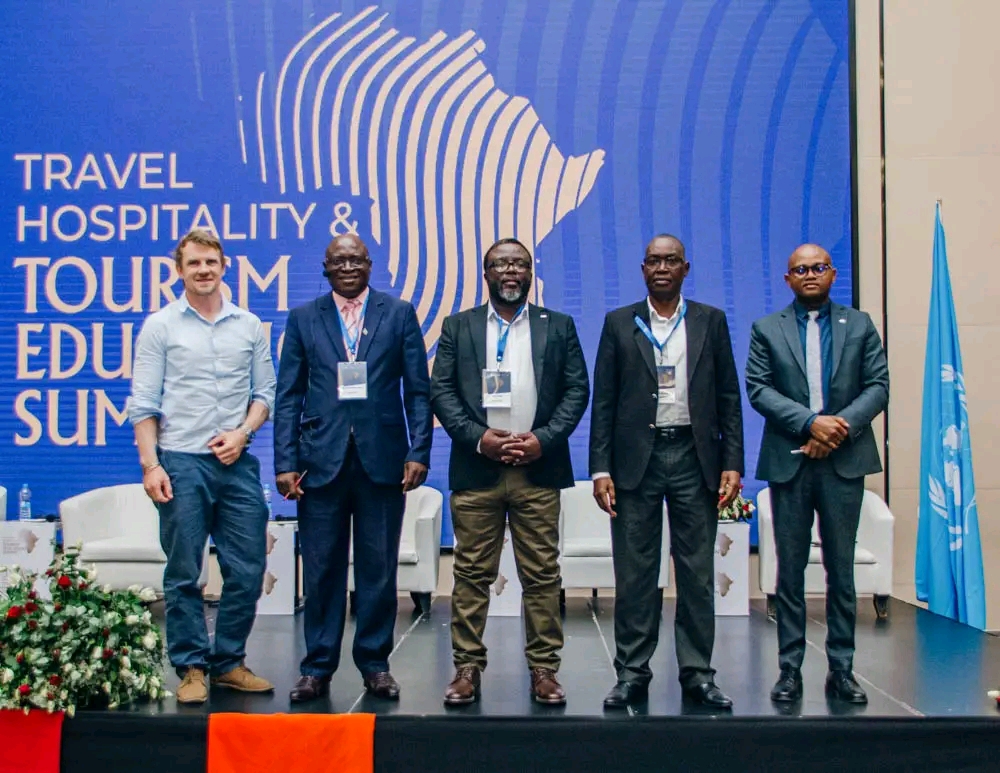
Zambia Hosts Successful Travel, Hospitality, and Tourism Education Summit
The Zambia Institute of Tourism and Hospitality Studies (ZITHS) has once again successfully organized its annual Travel, Hospitality, and Tourism Education Summit (THTES), marking a significant event in the country’s tourism sector.
Shifting Focus from Dialogue to Action
The fourth edition of THTES concluded in Lusaka with a substantial transition from mere dialogue to actionable frameworks aimed at revolutionizing tourism education and workforce development across Africa. Held from April 14 to 16, 2026, at the Mulungushi International Conference Center, this conference was highly collaborative, resulting in firm commitments and institutional arrangements anchored in the belief that education is crucial for tourism transformation.
Bringing Together Key Stakeholders
THTES 2026 served as a platform for various key players, including ministers from tourism, education, labor, and commerce, along with leaders from UN tourism bodies, academic institutions, and industry representatives. It distinguished itself as one of the most coordinated initiatives geared toward tourism workforce development on the African continent.
Adoption of the Lusaka Communiqué
A pivotal outcome from the summit was the endorsement of the Lusaka Communiqué on Tourism and Human Capital Development, bringing a coordinated inter-ministerial strategy to tourism workforce advancement for the first time. This communiqué, signed by Zambia’s Ministers of Tourism, Labor, Commerce, and Education, establishes a comprehensive governance model centered on three essential components: expanded apprenticeships, a labor market-responsive curriculum, and a robust oversight framework.
Focused Reforms to Enhance Competitiveness
Brenda Tambatamba, the Minister of Labor and Social Security, emphasized the importance of the Skills Advisory Board as a crucial element in this collaboration. She revealed that labor market intelligence studies are already informing the implementation of a pilot apprenticeship program to train 1,000 young people in tourism and other vital sectors, supported by the International Labor Organization and the European Union. In parallel, Minister of Commerce Chipoka Mulenga highlighted ongoing reforms aimed at dismantling the fragmented licensing system to elevate tourism as a key investment sector.
Aligning Education with Industry Needs
Education Minister Douglas Shakalima addressed the need for structural reforms within the education system, ensuring that tourism is recognized as an independent subject in Zambia’s Education Curriculum Framework for 2023-2033. Furthermore, Tourism Minister Rodney Sikumba linked these reforms to broader policy needs, advocating for coherence to sustain the momentum of implementation.
Reimagining Workforce Development
A defining aspect of THTES 2026 involved addressing the long-standing disconnect between academic qualifications and workplace competency. During technical sessions focusing on vocational training, apprenticeships, and workforce readiness, discussions advanced toward actionable strategies. Mark Rachuonyo Ogendi, CEO of Utarii College Kenya, presented a model that emphasizes 70% practical training and 30% theory within a fully operational training hotel, integrating foreign language training to enhance global competitiveness.
Global Standards and Private Sector Involvement
The International Labor Organization further bolstered global standards through the issuance of Recommendation 208 (2023) concerning quality training systems. This recommendation emphasizes legally defined contracts and measurable competency outcomes as key elements. The engagement of the private sector was equally crucial; InterContinental Lusaka reported improvements in intern performance following the introduction of a scholarship program, which also bolstered women’s participation in the training cohort.
Addressing Youth Unemployment and Gender Gaps
UN Tourism’s regional director for Africa, Elsia Grandcourt, contextualized these developments within the broader demographic challenges Africa faces, highlighting the alarming figure of over 72 million youth unemployed. Women, who represent 69% of the tourism workforce, continue to be underrepresented in leadership roles. She commended Zambia’s proactive approach in integrating tourism into formal education as aligned with global educational standards.
Immediate Priorities and Actionable Steps
THTES 2026 concluded with a unified acknowledgment that Africa’s tourism competitiveness hinges on effective execution rather than mere ambition. Participants identified three immediate priorities: evidence-based policymaking, the establishment of institutionalized MICE (Meetings, Incentives, Conferences, and Exhibitions) development, and the introduction of a STEM-integrated educational framework in line with industry needs. The conference set actionable steps, including the rollout of cross-ministerial labor market information and a streamlined licensing system, laying the groundwork for transformative developments in Africa’s tourism sector.
