


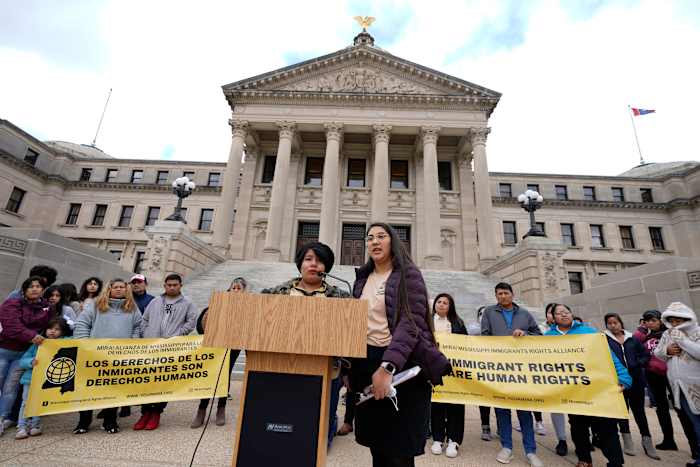
Mississippi Law Empowers Tracking of Undocumented Immigrants
A new Mississippi law grants the state’s Department of Public Safety the authority to compile a comprehensive list of undocumented immigrants residing in the state. Scheduled to be implemented on Wednesday, the law has raised significant concerns among immigration advocates who view it as a method to further target immigrants, paralleling former President Donald Trump’s agenda, which aimed at deporting millions of individuals without legal status in the United States.
Details of the Tracking and Data Collection Requirements
The legislation permits the Department of Public Safety to utilize “all reasonable lawful investigative means” to identify and quantify the number of undocumented individuals in Mississippi. This includes gathering personal details such as names, addresses, countries of origin, and age classifications. Additionally, the law mandates access to criminal backgrounds, as well as records of deportation proceedings, encompassing dates, locations, and circumstances.
Information Sharing with Local and State Authorities
Under the new regulations, the department is obligated to relay information about suspected law violators to local and state law enforcement agencies. Notably, the law does not expressly require or prohibit the sharing of this data with U.S. Immigration and Customs Enforcement (ICE), leaving open questions about inter-agency cooperation.
Supporters Argue for State’s Rights in Immigration Enforcement
Growing Trend of State-Level Immigration Legislation
Immigration-related laws are proliferating across various states, with over 100 such measures enacted in 2023 alone, according to reports from The Associated Press. In Republican-led states, these initiatives typically align with Trump’s immigration policies, such as mandating local sheriffs to engage with ICE and tightening regulations surrounding public benefits for noncitizens. Conversely, Democratic-led states have responded by enacting laws that restrict cooperation with ICE and limit immigration enforcement in sensitive environments like schools and hospitals.
Challenges of Implementation and Compliance Concerns
The Mississippi law contemplates ongoing tracking of undocumented immigrants over a two-year period, indicating that it is not merely a one-time assessment. This ongoing process may complicate matters as individuals transition between legal statuses or apply for overstay visas. Efren Olivares, vice president of litigation and legal strategy at the National Immigration Law Center, highlighted the challenges of enforcing such a law, echoing concerns about its potential implications for civil liberties.
Concerns Over Accuracy and Community Trust
The law may risk eroding trust between law enforcement and immigrant communities. Victoria Francis, a representative from the American Immigration Council, expressed alarm over the possibility that law enforcement resources could be redirected from community safety to investigations targeting immigrants who may contribute positively to the local economy. Lydia Grizzell from the ACLU of Mississippi further emphasized that such initiatives could deter individuals from seeking help from law enforcement, counteracting public safety objectives.
