


Unexpected Airstrike Strikes Fear in Nigerian Village
Sanusi Madabo, a 40-year-old farmer from Jabo village in Nigeria, was preparing for bed when he heard a thunderous noise reminiscent of a crashing airplane. He quickly emerged from the mud-brick home, accompanied by his wife, only to witness the sky glowing bright red.
The intense illumination persisted for hours, reminiscent of daylight. Madabo later learned he had witnessed a U.S. military airstrike targeting an alleged Islamic State camp.
On Thursday evening, President Donald Trump announced a “strong and deadly offensive” against Islamic State militants in Nigeria, with the Nigerian government confirming its cooperation with the operation.
Residents of Jabo, situated in northwestern Nigeria’s Sokoto state, described a scene of panic and chaos following the strike. Many expressed disbelief, noting that although their village had never previously experienced such violence, nearby areas frequently faced attacks.
“As we neared the scene, the heat intensified,” said Abubakar Sani, a local resident. “Our walls began to shake, and then flames erupted. It’s imperative for the Nigerian government to take necessary precautions to safeguard our community. None of us have experienced anything like this before.”
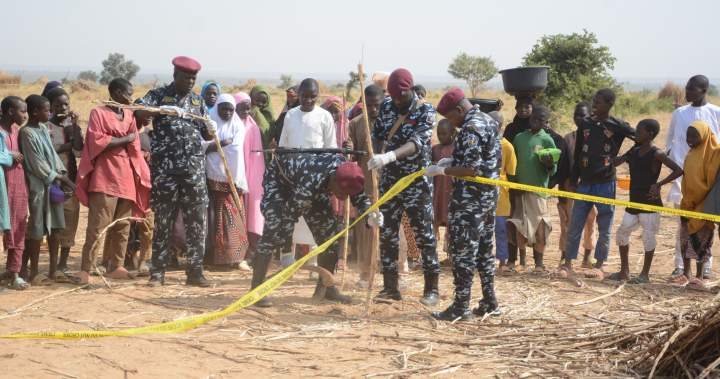
The Nigerian military did not respond to inquiries regarding the number of locations targeted during the airstrike. While locals stated there were no reported casualties, security forces quickly cordoned off the affected area, leaving many questions unanswered.
Complex Diplomatic Tensions Mark New Phase in Conflict
This airstrike represents a culmination of escalating diplomatic tensions between Nigeria and the United States. The Trump administration alleged that a genocide against Christians was occurring in Nigeria—an assertion that the Nigerian government vehemently denies.
However, Nigeria’s Ministry of Foreign Affairs subsequently acknowledged that the strike resulted from intelligence sharing and strategic collaboration. Foreign Minister Yusuf Tuggar characterized the incident as “a new phase in an old conflict,” suggesting that further military actions may follow.
Analyst Bulama Bukarti from the Tony Blair Institute noted that the fears among residents are exacerbated by insufficient information about the airstrike’s impact. “Transparency from both the U.S. and Nigerian governments would help alleviate tensions. The absence of communication fosters panic and heightens the community’s anxiety,” he explained.
Emergence of New Threats in Nigeria’s Security Landscape
Many analysts speculate that the offensive may have targeted the Laklawa Group, which is relatively new to Nigeria’s ongoing security crisis. Since their first attacks were documented in 2018, the group has been recognized for its composition of foreign fighters from the Sahel region. However, conclusive ties to the Islamic State remain unverified, as the IS’s Nigerian affiliate primarily operates in the northeast, contending with Boko Haram for control.
Some villagers expressed their concerns about safety following the strike. Local leader Aliyu Garba reported seeing debris scattered across the area, with residents flocking to the site in search of valuables amidst the rubble. Among them was Barila Saidu, a 17-year-old bride-to-be, who lamented, “I should be excitedly planning my wedding. Instead, I’m filled with dread. My family’s fear disrupts everything.”
