


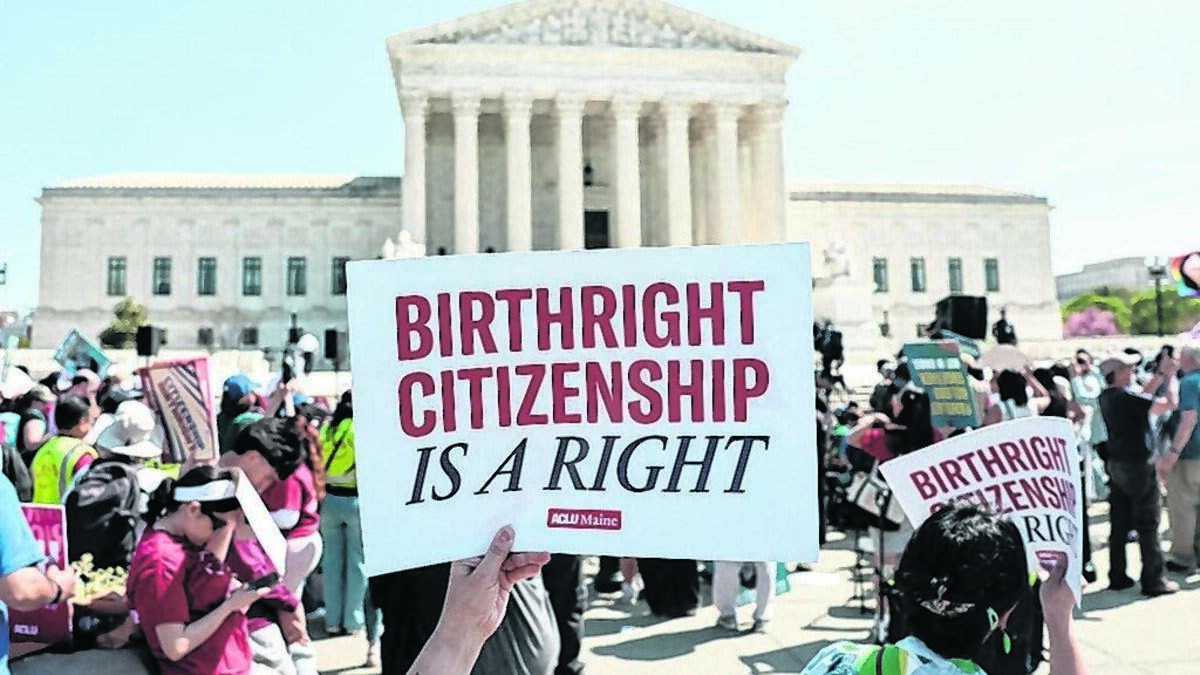
Supreme Court Upholds Birthright Citizenship, Offering Hope to Immigrants
Immigrant advocacy organizations in North Carolina expressed relief following the U.S. Supreme Court’s ruling on Tuesday, which affirmed birthright citizenship. However, they also cautioned that significant challenges remain, particularly within the state.
The 6-3 decision reinforced the long-established interpretation of the Fourteenth Amendment, asserting that, with very few exceptions, almost everyone born in the United States is recognized as a citizen. The ruling countered an executive order from the early days of President Donald Trump’s second term, which aimed to deny U.S. citizenship to children born to parents who are in the country temporarily or illegally.
“We are pleased that the Supreme Court made the correct decision to uphold the 14th Amendment,” stated Stefania Arteaga, co-executive director of the Carolina Migrant Network in Charlotte, which offers legal services and educational resources.
Advocacy groups noted that while the ruling is reassuring, it was not entirely unexpected. “Birthright citizenship should not have been a contentious issue to begin with,” said Andreina Marchi, defense manager for Siembra North Carolina, an organization that provides legal and political assistance to the Latino community in the state.
Ezra Rush, a staff attorney with the Charlotte Legal Advocacy Center’s Immigrant Justice Program, described the ruling as a “clear relief” for families navigating mixed immigration statuses, ensuring that their American-born children retain their citizenship.
This decision offers immigrant parents a reassuring promise for their children’s futures, enabling families to continue their pursuit of the American Dream. Nevertheless, the immigrant communities in Charlotte and across North Carolina still confront substantial hurdles, especially at the state level.
Last week, North Carolina House Republicans overrode Governor Josh Stein’s veto of Senate Bill 153, which mandates that state and local law enforcement collaborate with federal immigration authorities. Marchi emphasized the vulnerability of parents with U.S. citizen children: “If a parent is detained, that child may be at risk of displacement, despite being a citizen.”
The ongoing legislative efforts at the state level are also affecting organizations that support immigrants. Lawmakers have targeted the Benevolent State Fund, which provides crucial financial assistance for low-income individuals seeking civil legal aid.
“The government has imposed significant restrictions on our federal immigration work, impacting vulnerable populations such as victims of human trafficking, abuse, unaccompanied minors, and asylum seekers,” noted Larissa Magnon, CEO of the Charlotte Legal Advocacy Center.
This ruling comes on the heels of a Supreme Court decision allowing the Trump administration to terminate Temporary Protected Status for Haitian and Syrian immigrants, which could have far-reaching consequences for others eligible for the program.
Yet, supporters of immigrant rights remain resolute in their mission to assist local communities. Hector Vaca, director of immigration justice at Action NC, highlighted collaborative projects with local artists, along with initiatives such as “Know Your Rights” workshops to educate immigrants about interactions with immigration officials and efforts to foster trust within immigrant communities.
Ultimately, advocates view the Supreme Court’s recent decision as a “sign of hope” for vulnerable immigrant families. Vaca remarked, “This decision signifies progress towards a nation that recognizes and embraces our diverse identities, suggesting that we are on the right path.”
