


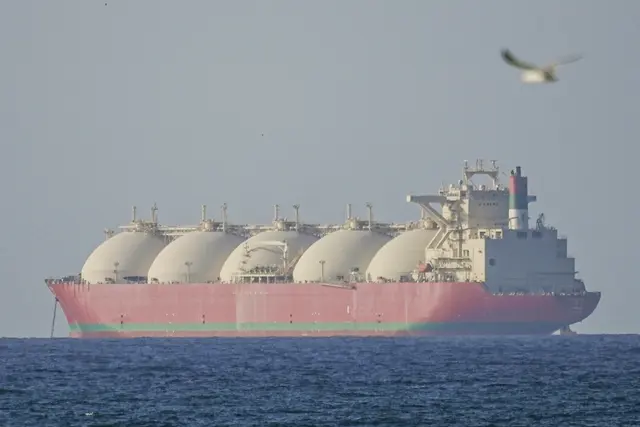
Tensions Escalate in the Strait of Hormuz
Rising tensions in the Middle East have prompted renewed scrutiny of shipping movements through the critical Strait of Hormuz. Iran’s sudden reimplementation of stringent shipping restrictions, just a day after announcing their reopening, has deepened concerns about escalating conflicts with the United States.
This situation is sending shockwaves throughout global energy markets. In reaction, U.S. President Donald Trump firmly rejected Iran’s stance, emphasizing that the U.S. will not yield to threats. He signaled that the U.S. would continue to exert pressure on Iran following a statement from Iranian military officials accusing the U.S. of maintaining a “blockade” of Iranian ports. This assertion has reportedly compelled Iran to revert to stringent measures, allowing sea traffic only for vessels that pay specific tolls.
Iranian authorities expressed their stance, indicating that they had initially agreed to facilitate limited maritime traffic in a gesture of good faith. However, with the U.S. continuing its blockade, they stated that strict military control over the strait has been reinstated. The Iranian government made it clear that restrictions would persist unless the U.S. ensures unrestricted access for Iranian vessels.
U.S. Stance Remains Firm
In a statement from the Oval Office, Trump reiterated that the U.S. would not be intimidated by Iranian aggression. He remarked on the complexities of negotiations, asserting that Iran had a history of disruptive tactics. Trump emphasized that American pressures would remain until a comprehensive agreement is reached, further reinforcing Tehran’s hardline stance.
Reacting to Trump’s comments, Iran’s Deputy Foreign Minister Saeed Khatibzadeh described the U.S. approach as inconsistent and counterproductive. He stressed the need for safety measures for all vessels traversing the region, cautioning that the current impasse hinges on the U.S. abandoning its maximalist negotiating position. Despite admitting that Iran had engaged in talks out of necessity, Khatibzadeh maintained a defiant tone, asserting Iran’s commitment to defense.
Incidental Gunfight Raises Alarm
The situation escalated further when the UK Maritime Trade Operations (UKMTO) confirmed that Iranian Revolutionary Guard Corps gunboats fired upon a tanker in the strait, marking the first such incident in over ten days. Reports indicated that the tanker was approached by two IRGC boats while navigating approximately 20 nautical miles off Oman’s coast. Though the crew remained safe, the lack of prior warning raised alarm among shipping operators.
Following this incident, India has taken tangible steps to address its concerns regarding the security of its commercial shipping. The Indian government summoned Iran’s ambassador following reports that Indian-flagged vessels were endangered during the conflicts. Indian Foreign Minister Vikram Misri expressed profound concern over the incident, stressing the need for Iran to ensure safe passage for ships meant for India, reflecting the country’s reliance on regional energy routes.
U.S. Military Actions Intensify
The U.S. Central Command (CENTCOM) confirmed that the blockade had compelled numerous ships to alter their courses. It reported that at least 23 vessels had turned back in compliance with U.S. military directives. Although the blockade does not directly target the Strait of Hormuz, its implications are reshaping maritime movements in the region, igniting Iranian claims that such actions violate ongoing ceasefire agreements.
Iran Implements New Shipping Regulations
In a significant turn of events, a senior Iranian official announced that vessels would only be prioritized for transit if they paid the required toll. This development effectively places one of the world’s most critical shipping routes under Iranian administrative control, necessitating that vessels submit detailed information and secure transit certificates prior to passage. Iran’s Supreme Leader also issued a veiled warning about the nation’s naval preparedness, indicating readiness to respond decisively to threats.
As tensions rise, regional powers are ramping up diplomatic efforts to defuse the crisis, with foreign ministers from various nations convening to push for a renewed dialogue. The Egyptian Foreign Minister expressed cautious optimism, suggesting that a resolution between the U.S. and Iran might be achievable soon. Pakistan is notably taking a proactive role as a mediator, seeking to sustain a fragile ceasefire in this increasingly volatile environment.
