


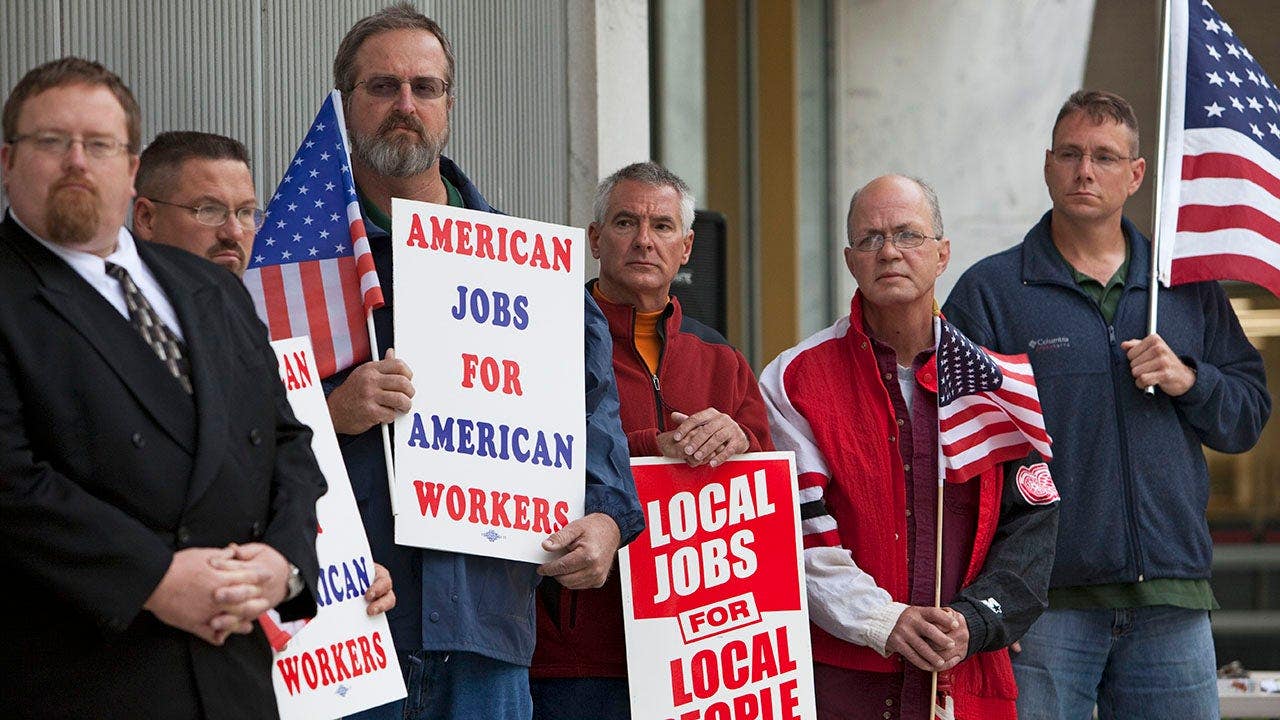
Rethinking the Impact of Legal Immigration on American Workers
The overwhelming consensus among Americans is that illegal immigration disrupts the rule of law, negatively affects the workforce, and diminishes the quality of life in the United States. However, an increasing number of citizens are becoming aware that the complexities surrounding legal immigration may pose similar, if not greater, challenges for hardworking Americans as illegal immigration does.
Urgent Need for Legal Immigration Reform
An urgent reform of the legal immigration system is necessary, particularly as it has become a means for major tech companies and numerous other businesses to quietly replace American workers with visa-holding immigrants. Central to this issue is the H-1B visa program, often portrayed as a rigorous, merit-based framework designed to attract the most skilled individuals globally. In practice, however, it operates as a loosely monitored program that often fills jobs with lower-wage, sometimes entry-level workers, undermining the opportunities available to American citizens.
The Reality Behind H-1B Visas
Data highlights the problematic nature of the H-1B program. According to the Department of Homeland Security, a staggering 83% of H-1B visas filed from 2020 to 2024 were for entry-level positions paying significantly below local median wages. Furthermore, a recent report by the Department of Labor indicated that the minimum salary mandated for H-1B workers is $19,000 less than that of U.S. workers in similar roles, pointing to a deliberate undervaluation of American labor.
Concerns Surrounding the OPT Program
The Optional Practical Training (OPT) program is yet another facet of the legal immigration landscape that warrants scrutiny. This program permits foreign students to remain in the U.S. for up to three years post-graduation, provided they are employed—or at least claiming employment—through a portal plagued by insufficient oversight. With no limit on the number of participants and lacking requirements for employers to prioritize American citizens, OPT poses a significant threat to local job markets.
Incentives for Employers Favoring Foreign Workers
The shortcomings of the OPT program, which allows employers to bypass payroll taxes by hiring foreign students, create further disincentives for companies to employ American workers. Although this program did not originate from congressional action and many Americans remain unaware of it, over 400,000 international students are now eligible to work in competitive fields such as technology and engineering.
Linking OPT and H-1B Visa Programs
The relationship between the OPT and H-1B programs is evident, as international students can transition from a student visa to the OPT program and subsequently to an H-1B visa with the same employer. This pathway, facilitated by a “dual intent” provision introduced by lobbyists in the 1990 immigration law, allows foreign students to utilize employment opportunities as a stepping stone toward permanent residency.
Addressing the Scale of Fraud and Misuse
Both programs are rife with issues, including widespread fraudulent practices. In May, President Trump’s anti-fraud task force identified over 10,000 cases of international students in the OPT program falsely claiming employment. Furthermore, a recent investigation exposed a network of Indian universities that sold fake degrees used to obtain H-1B visas. While targeted measures like deporting fraudulent students or shutting down diploma mills may seem necessary, these reactive steps do not address the systemic issues at play.
The larger problem lies in the structural design of the legal immigration system—crafted by corporate interests to attract vast numbers of foreign workers with minimal scrutiny. To rectify these issues, a sweeping overhaul of the legal immigration framework is essential, including the permanent elimination of both the H-1B and OPT programs.
