


Protesters Undertake 80-Mile Walk to Raise Awareness About Immigration Detention Conditions
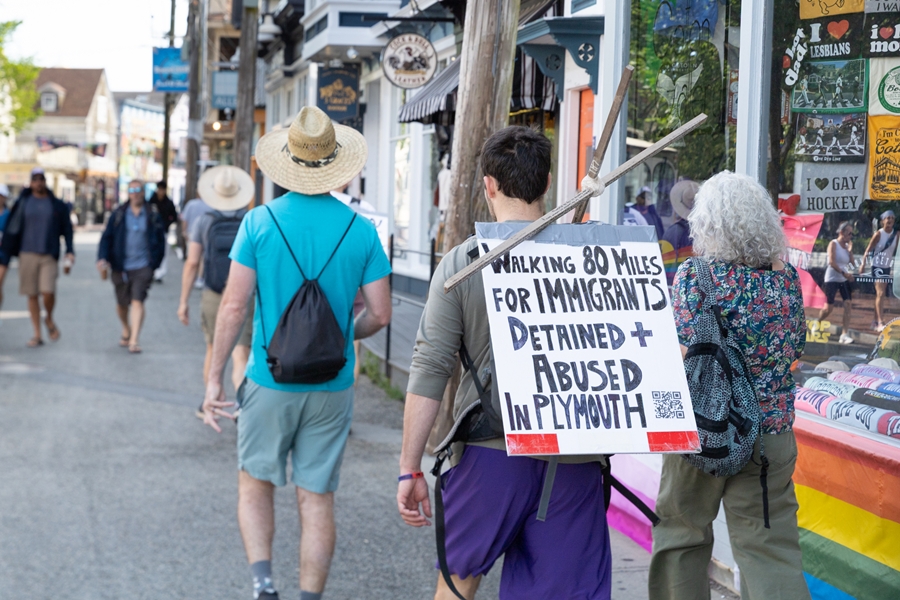
A small group of protesters embarked on an 80-mile walk on Sunday, starting from Pilgrim’s First Landing Park in Provincetown and heading to the Plymouth County Jail, the only long-term Immigration and Customs Enforcement (ICE) detention center in Massachusetts.
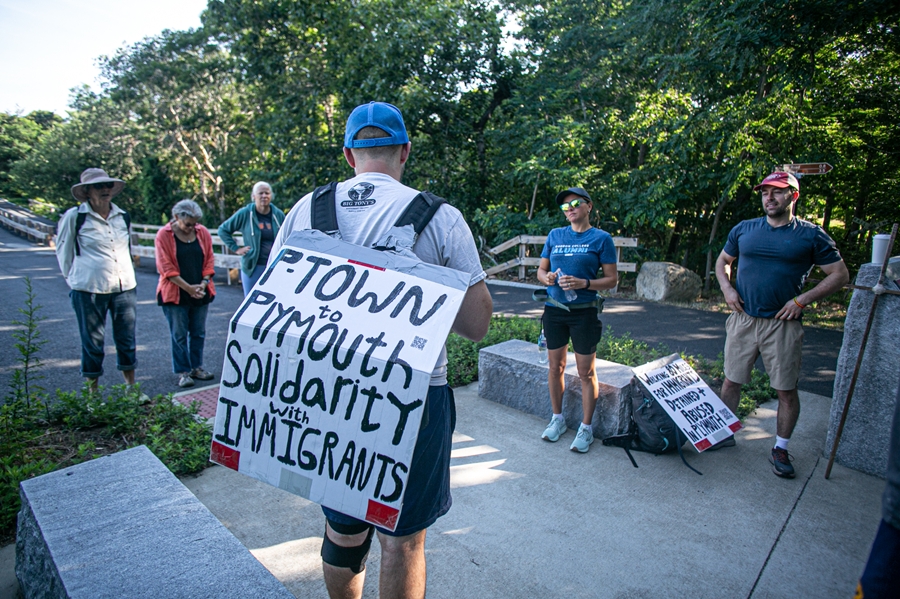
Friends Chris Tansey and Connor May, who became acquainted through the Jesuit Volunteer Corps and studied together at Boston University, organized the walk as both a form of protest and a spiritual pilgrimage. They aim to shed light on reports of inadequate food, limited medical care, and poor conditions at the Plymouth County Correctional Facility. Additionally, they are raising funds online for BIJAN, the Boston Immigration Justice Accompaniment Network, which provides bail bonds and legal defense resources for immigrants.
The Plymouth County Sheriff’s Office has denied allegations concerning poor conditions at the jail, issuing a written statement to The Independent that disputes such claims.
Craig Swallow, a candidate challenging U.S. Rep. Bill Keating in the Democratic primary for a district encompassing Cape Cod, Plymouth, and New Bedford, joined Tansey and May on several of their walks, including this latest effort.
The walk commenced at 8:30 a.m. with seven participants. Tansey remarked that the Mayflower settlers, who initially landed in Provincetown before migrating to Plymouth, were “immigrants with the wrong documents.”
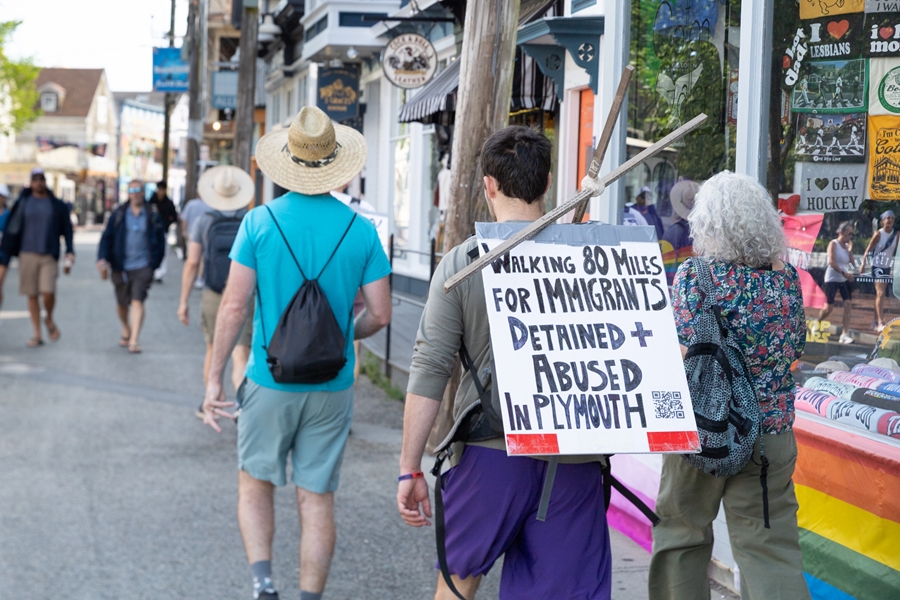
“Our primary goal is to promote human dignity and respect, aside from addressing the complex legal issues surrounding citizenship and the right to reside here,” Tansey explained.
The group proceeded down Commercial Street, which bisects Provincetown, before continuing along Route 6 towards Wellfleet. The following day, another dozen participants gathered outside the South Wellfleet post office to begin a 24-mile trek to Harwich. “We had individuals ranging from 11 years old to elderly participants joining us from various locations around the country,” Tansey noted. “While we may be a small group, our camaraderie strengthens each day.”
On July 17, Representative Keating visited Plymouth Jail and interviewed four immigration detainees. All were residents of Massachusetts, aged between 20 and 40. His office has reached out to them, aiming to address the consent forms mandated by the Department of Homeland Security for congressional inquiries involving detained immigrants.
Keating reported that all four detainees expressed experiencing significant pressure from ICE officials to consent to their deportation. “When I asked if they had been interrogated and what was said to them, they indicated they were pressured to sign paperwork granting consent for their deportation,” he recounted. “One detainee requested to speak with a lawyer but was told they needed to sign the paper first.”
In his assessment of conditions at the facility, Keating mentioned inquiries concerning food and medical care. He concluded that the psychological toll of imprisonment, rather than physical conditions, was the most impactful. “The loss of freedom, separation from family, and anxiety—how could anyone endure being separated from their children?” Keating reflected. “These experiences inflict the deepest emotional trauma, far beyond any issues with walls or food.”
