


This article was first published on Planet Detroit and is republished here under the Creative Commons Attribution-NonCommercial 4.0 International License.
The extent of immigration enforcement in Pontiac has emerged as a pressing concern for residents, particularly within the local Latinx community. Elida Reyes, a key figure in the immigrant advocacy realm, was alerted to alarming changes during a church service in the spring of 2025 when she noticed dwindling attendance among Latinx congregants.
Seeking answers, Reyes began inquiring about their absence, discovering that many were being detained by U.S. Immigration and Customs Enforcement (ICE). At 69, she leads Community Aid For Empowerment (CAFE), an organization dedicated to supporting affected families by documenting arrests, providing food assistance, and facilitating transportation to court appointments. CAFE has established an ICE hotline and runs “Know Your Rights” workshops to empower individuals facing potential deportation.
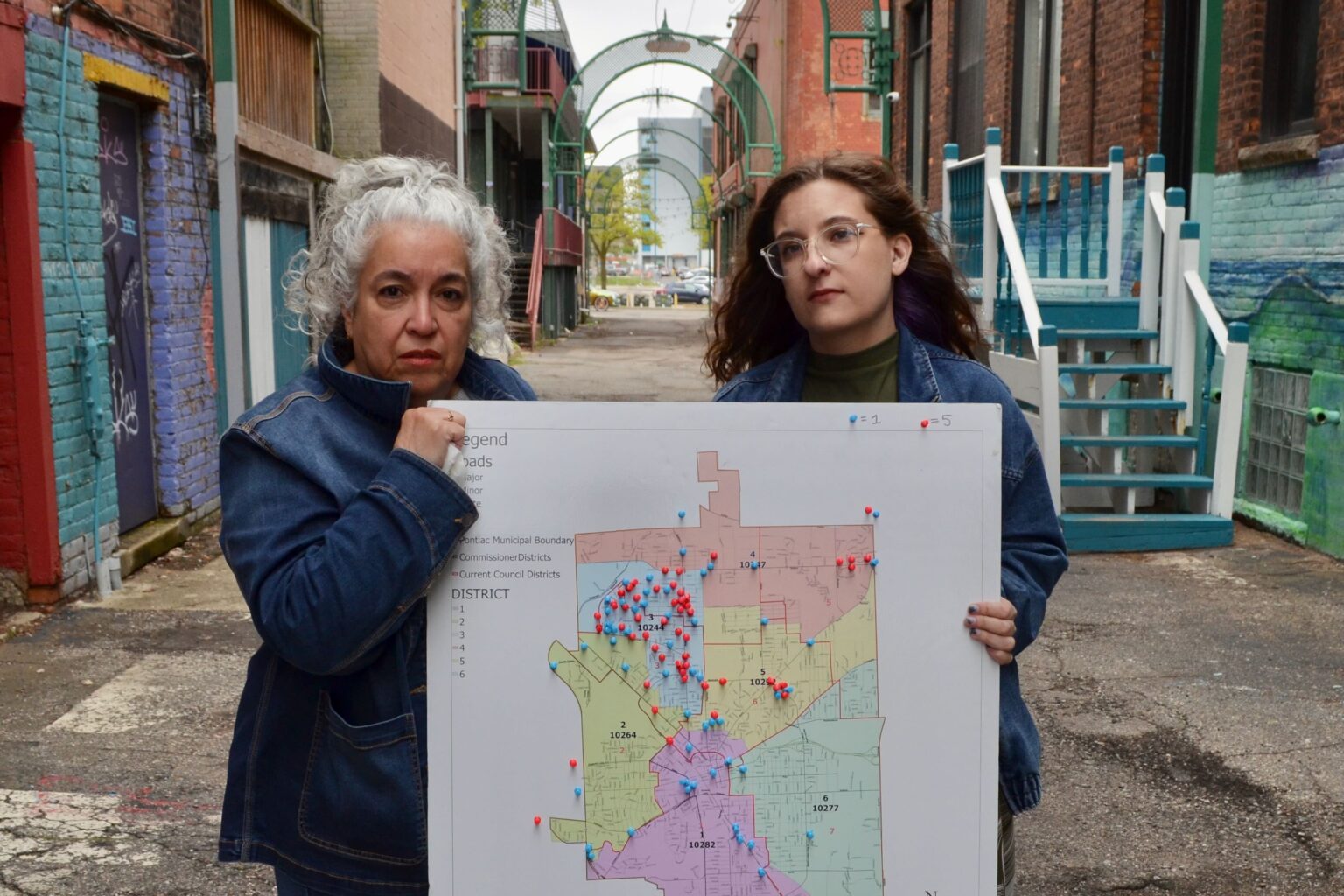
The organization estimates that more than 400 residents have been arrested by ICE since enforcement escalated in 2025. Given Pontiac’s population of approximately 62,000, many organizers believe the actual number of arrests could be significantly higher. This uptick in immigration activity near community hubs like grocery stores and schools has created a pervasive atmosphere of fear, leading many to feel confined to their homes, a situation Reyes poignantly describes as “voluntary house arrest.”
Predominantly Targeting Latino Neighborhoods
June 21 marked an especially intense day of immigration enforcement in Pontiac, according to Alexis Huyck, a CAFE executive and local school teacher. He observed that those targeted for arrest seemed to be “just anybody,” often holding valid work permits and essential documentation. Huyck recounted incidents where the time from arrest to transport was disturbingly brief—sometimes as little as six minutes. Reyes, a lifelong resident, expressed deep concern for the emotional toll that such swift detentions have on families within the community, noting the rising urgency of these issues.
Confusion Around Law Enforcement Collaboration
Members of CAFE frequently spot Oakland County sheriff’s deputies present during immigration operations, raising troubling questions. Reyes questioned the rationale behind police assistance to ICE, particularly in the absence of a federal 287(g) agreement, which empowers local law enforcement to perform certain immigration functions. While the Taylor Police Department holds such an agreement, the Oakland County Sheriff’s Office maintains it does not participate in immigration enforcement. A spokesman confirmed that the Sheriff’s focus remains on state and local law, ensuring community safety.
ICE’s Position on Enforcement Practices
ICE, meanwhile, has declined to provide detailed comments on specific operations in Pontiac. A representative stated that their officers enforce laws established by Congress and emphasized collaboration with local law enforcement for facilitating public safety. Data from the Deportation Data Project indicated that ICE detained 3,298 individuals across Michigan in 2025, intensifying community anxieties.
Historical Context of Pontiac’s Law Enforcement
The Oakland County Sheriff’s Office assumed responsibility for law enforcement in Pontiac back in 2011 after the Pontiac Police Department was disbanded due to budgetary constraints. This collaboration began amid a financial crisis managed by a state-appointed emergency manager. City Councilman Mikal Goodman, who was a child during this transition, expressed the importance of having accessible and effective law enforcement, but also highlighted the necessity for communities to maintain authority over local policing.
Community Responses to Immigration Enforcement
In response to rising fears and frustrations about immigration raids, the Pontiac City Council unanimously adopted a resolution on March 3, advocating for safe access to local essential spaces, including places of worship, schools, and daycare centers. The council has since declared a one-year moratorium on the establishment of new detention facilities in the city. Mayor Mike McGuinness noted that ongoing discussions with the Sheriff’s Office are pivotal for clarity on their enforcement duties, especially concerning immigration actions.
The Impact on Pontiac’s Youth
Reyes and Huyck highlighted the profound effect of immigration arrests on school attendance and enrollment in the Pontiac School District. Many families CAFE works with are intertwined in complex circumstances, with children born in the U.S. now facing potential separation from their parents. Huyck lamented that this situation deprives children of their childhood experiences, leaving them fearful and unwilling to engage in normal activities like going to the park. Reyes painted a picture of trauma among Pontiac’s children, who worry daily about the safety and presence of their parents.
