


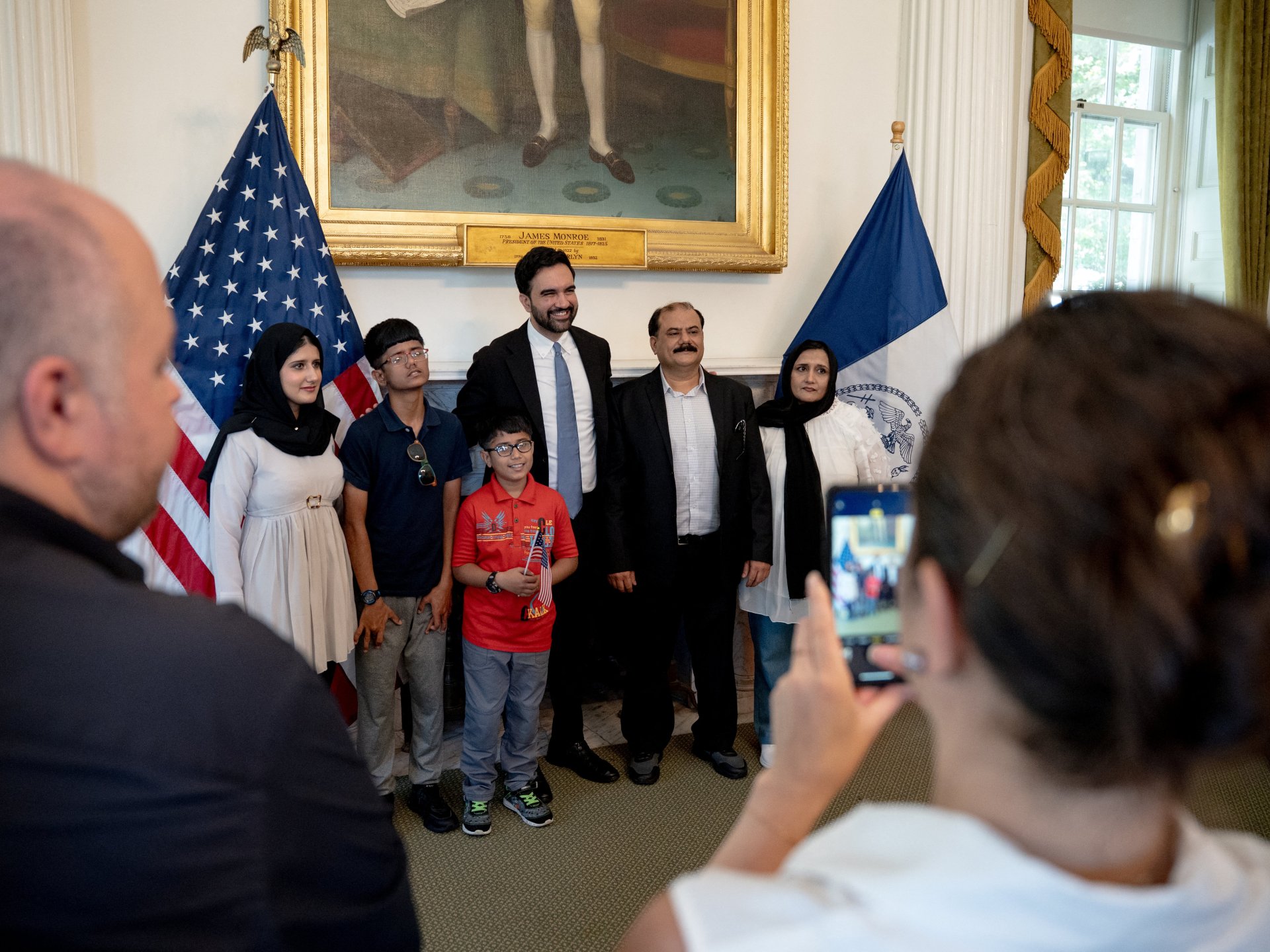
Leo XIV, the first American-born pope, and Zoran Mamdani, the first Muslim mayor of New York City, have issued strong pro-immigration statements to mark the 250th anniversary of American independence.
Their remarks came just ahead of the July 4th Independence Day celebrations, commemorating the signing of the Declaration of Independence in 1776.
Key Messages from Religious and Civic Leaders
While neither Pope Leo nor Mayor Mamdani directly named former President Donald Trump, their comments implicitly criticized his administration’s stringent immigration policies.
In a video message from the Vatican directed at the National Constitution Center in Philadelphia, Pope Leo celebrated the contributions of immigrants in shaping the United States.
He emphasized the need for the nation to renew its commitment to foundational principles, advocating for the recognition of human dignity that transcends national borders.
“For countless individuals around the world over the past 250 years, the unwavering pursuit of the noble vision set forth by our Founding Fathers has made America synonymous with freedom, as it welcomed successive waves of immigrants,” the Chicago-born pope stated.
Pope Leo has previously labeled the Trump administration’s immigration measures as “inhumane.” In his remarks on Friday, he called for a public discourse marked by moderation, respect for differing viewpoints, and a commitment to finding common understanding.
“This historic anniversary presents us with an opportunity to reflect on our founding ideals as we strive to live up to the dreams that have earned America its reputation as the Land of the Free and Home of the Brave,” Leo noted.
In a parallel address, Mayor Mamdani spoke to a group of newly naturalized citizens in New York City, a vibrant metropolis of approximately 9 million people where over 200 languages are spoken.
As a naturalized citizen himself since 2018, Mamdani urged the audience to reject the powerful narratives that promote a vision of the nation where “only a select few enjoy freedom and not everyone is created equal.”
“Some will claim that the more we welcome into America, the less we become. They believe America is reserved for those with the right accent or skin color,” Mamdani argued. “For the rest of us, they suggest we should be thankful just to be allowed to visit. How limiting, how fragile, how uninspired such views are.”
This speech followed a series of surprising victories for candidates supported by Mamdani in New York’s Democratic primary, marking a significant shift in political dynamics within the party as they advance toward the November midterm elections.
Responses to Current Immigration Policies
These speeches contribute to the ongoing debate concerning how America defines itself through its ideals.
Proponents of diversity view the United States as a melting pot or mosaic of various cultures, illustrating its strength through inclusion.
Conversely, the Trump administration dismissed terms like “diversity, equity, and inclusion,” claiming they undermine the nation’s meritocratic principles.
Stephen Miller, a key adviser to former President Trump, significantly influenced the administration’s hardline immigration stance, a defining feature of both of his terms.
Calling modern immigration practices a fundamental threat, Miller spearheaded efforts to curtail nearly all forms of immigration during Trump’s presidency, including legal pathways such as refugee admissions, asylum requests, and temporary work visas.
On the first day of Trump’s second term, Miller pushed for an executive order abolishing birthright citizenship, which grants citizenship to nearly all children born in the U.S.
Critics warned that this move would violate the U.S. Constitution and risk leaving some infants without citizenship. Nonetheless, Miller referred to the principle of birthright citizenship as “national self-annihilation” and characterized immigrant children as threats to the fabric of American society.
Just ahead of the nation’s 250th anniversary, the U.S. Supreme Court invalidated Trump’s executive order, labeling it unconstitutional. However, the court upheld other aspects of Trump’s immigration policy, allowing the Department of Immigration to physically block asylum seekers from entering the U.S. to file claims of protection.
After this ruling, Miller remarked that “America’s doors are completely closed to asylum seekers.”
On this historic occasion, President Trump plans to visit Mount Rushmore in South Dakota, where he is expected to deliver remarks honoring the 250th anniversary of the United States on July 4th.
Trump’s speeches are scheduled for 10:30 PM ET on Friday and 9:45 AM ET on Saturday in Washington, D.C.
