


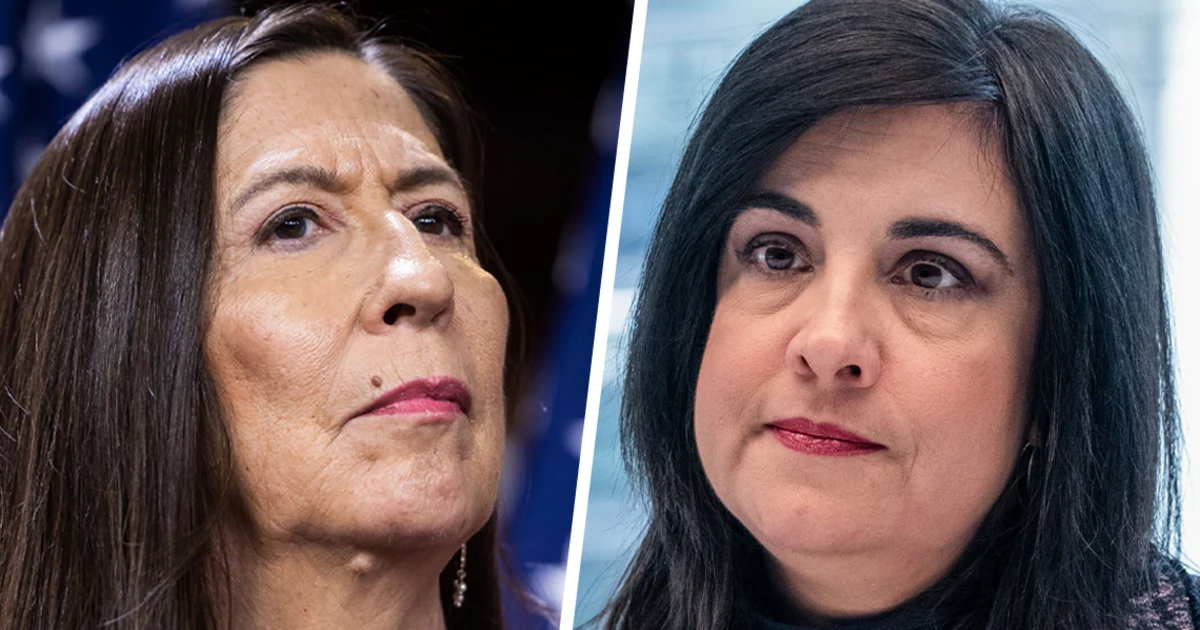
Bipartisan Efforts to Establish Women’s History Museum Face Growing Democratic Opposition
A decade-long bipartisan initiative to create a women’s history museum in Washington, D.C., is coming closer to realization, yet support from Democrats for the associated legislation has noticeably decreased in recent weeks. An upcoming House vote on the proposed bill could prove contentious as many Democrats now signal opposition amid concerns over recent amendments backed by Republicans.
The legislation, introduced by Rep. Nicole Malliotakis (R-N.Y.) in February 2025, boasts 231 co-sponsors, including 127 Democrats. Last year, the proposal enjoyed strong bipartisan backing, leading to frustrations among Republicans when House Speaker Mike Johnson (R-La.) did not advance it.
However, Democratic sentiments have shifted, particularly as House members express concerns that an amendment would grant President Donald Trump unilateral authority over the museum’s location and construction oversight. This divergence comes as the need for strong bipartisan support highlights the potential political ramifications surrounding the museum’s establishment.
An amended version of the bill designates a site near the United States Holocaust Museum for the women’s history museum, while allowing the president to select an “alternative location” within 180 days of the bill’s passage. This modified language empowers the Smithsonian’s Board of Trustees to manage the design and building process, which must then be approved by architectural planning committees appointed by Trump.
These committees are also expected to oversee various building projects championed by Trump during his administration, including upgrades to the White House and other iconic venues. The Democratic Women’s Caucus formally opposed the bill earlier this week, following a letter from 146 Democrats urging the House leadership to revert to the original proposal.
The amendments have sparked significant backlash, with critics arguing that they not only give Trump control over critical design elements but also impose restrictions that, in effect, would limit museum access to “biological women.” This stipulation draws criticism for its discriminatory implications against transgender individuals, raising broader issues of inclusivity and representation in cultural institutions.
In a recent interview, Malliotakis accused Democrats of hiding behind their objections, framing their withdrawal of support as a reaction to language about limiting access based on biological identity. She maintained that the museum’s purpose is to honor the contributions of women and dismissed the Democrats’ concerns as politically motivated.
Meanwhile, Rep. Judy Chu (D-Calif.) criticized the amendment, asserting that it undermined the collaborative spirit previously established for the bill. She articulated that the Republican alterations reflect an unreasonable politicization that jeopardizes years of bipartisan efforts. New Mexico Rep. Teresa Leger Fernandez echoed these sentiments, emphasizing that the revised proposal exemplifies a Republican fixation on polarizing issues rather than genuine advancement of women’s history.
This partisan divide contrasts sharply with the earlier collaboration exhibited in December, when bipartisan support was still evident. Malliotakis has previously criticized Johnson for delaying the vote, indicating that there had been assurances from him about moving forward with the legislation, which now appears uncertain.
Despite hopes for unity surrounding the museum’s importance, recent developments highlight deepening rifts. As both sides continue to navigate political realities, the future of the women’s history museum remains precariously balanced, underlining the challenges of achieving consensus in today’s polarized climate.
