


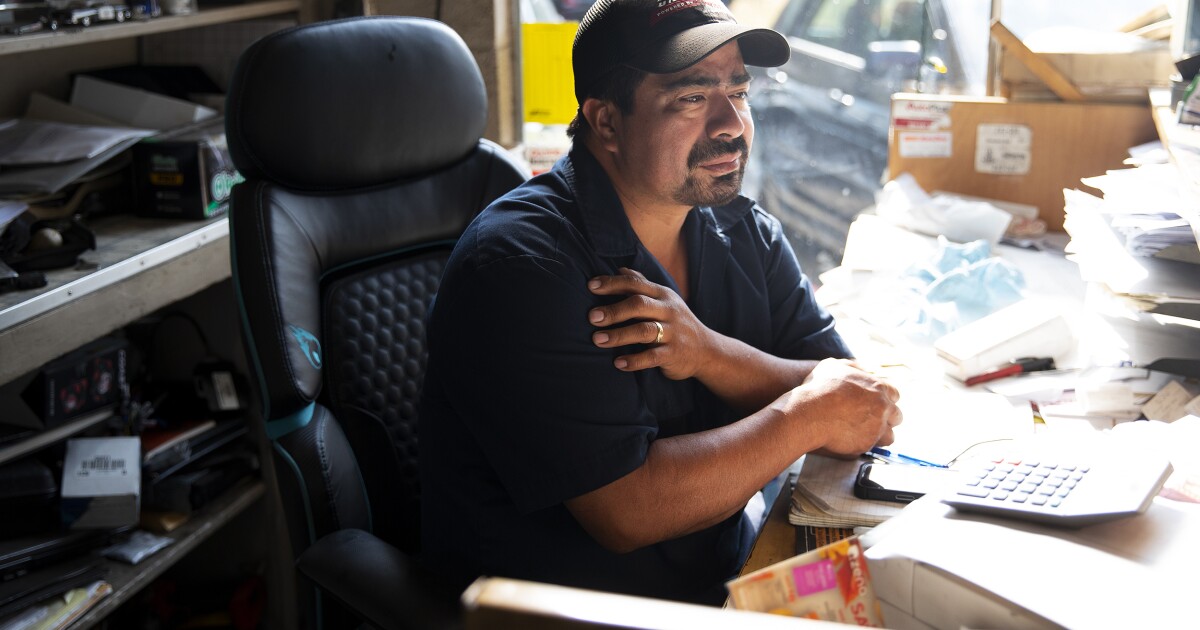
Angel Tepare’s Mission Amidst Immigration Enforcement Struggles
Angel Tepare was in the midst of loading an SUV onto a flatbed tow truck in south King County, looking for a reliable anchor point to pull the vehicle fully onto the bed. The front wheels of the Suburban were already resting on the lowered truck bed, and all that was visible in the glaring afternoon sun was Tepare’s black work boots and pants.
Tepare has taken on the daunting task of following Immigration and Customs Enforcement (ICE) agents around the county, towing vehicles left behind after arrests. So far, he has towed at least 11 cars, each one telling a story of lost opportunity and dislocation.
When a vehicle is abandoned during a traffic stop by ICE, the agency requires the arresting officer to arrange for its retrieval, either by calling a local towing service or instructing the detainee’s family to pay associated fees at the seizure site. Tepare, however, offers a benevolent twist—he provides his towing services free of charge. After picking up a vehicle, he often calls the owner to let them know their car is safe in a small parking lot by a local repair shop.
Impact of Recent ICE Operations
The rise in ICE operations has garnered attention, particularly following several shootings by ICE agents in Texas and Maine. Law enforcement experts have raised concerns about rapid employee hiring within federal agencies, fearing it may compromise thorough vetting processes for new recruits.
Among the vehicles Tepare has stored temporarily is a weathered gold Toyota Camry, a commuter car that has remained unclaimed for weeks after its arrest by ICE. Tepare reflects on the plight of the working class, who often find their lives upended by sudden ICE interventions. He observed these arrests often target individuals during daily commutes, rendering them helpless. “They come to pick you up, concealed, leaving you uncertain if they are detaining you or if it’s something worse,” he explained in Spanish.
Escalating Enforcement Tactics
Tepare has noted a marked increase in the number of stranded vehicles following ICE arrests over recent months. This trend coincides with a surge in new immigration cases in Seattle’s suburbs, areas now identified as hotbeds for enforcement activity. Researchers from the University of Washington Center for Human Rights reported 50 arrests in June alone, though this figure likely underrepresents the actual number due to underreporting.
Angelina Godoy, the Center for Human Rights Director of Research, highlighted that ICE targets areas deemed “high in immigrant populations” as part of their enforcement strategy. These tactics often involve scanning license plates indiscriminately, leading to unforeseen arrests within mere minutes of identification.
Community Response and Ongoing Concerns
ICE’s aggressive approach has raised alarm in the community, reflecting a broader pattern of using force during arrests that may not necessitate such measures. The Washington Immigrant Solidarity Network reported alarming instances of agents employing excessive force, including threatening individuals with weapons and physically assaulting them.
Tepare, who himself faced immigration challenges in the past, understands the fear and frustration that permeate the community. After gaining citizenship through marriage, he has dedicated himself to supporting those affected by ICE raids. He recalls the distressing sight of an arrest at a nearby gas station where ICE agents broke a man’s window and forcibly dragged him out of the vehicle. Memories of earlier immigration policies under the Obama administration, which paved the way for subsequent oppressive tactics, haunt him.
Personal Commitment to Advocacy
Despite his frustration, Tepare has focused on making a difference in the lives of those impacted by these harsh realities. “If I can help by picking up a car and informing the owner that it’s safe, then that’s a small victory,” he shared. His lot, bustling with cars like the newly towed Suburban and the abandoned gold Camry, also serves as a refuge for families in distress, offering them hope amidst uncertainty.
Tepare documents each tow via social media, hoping to reunite owners with their vehicles. His posts often include a call for anyone who recognizes the vehicle to reach out to him, though the task of tracking down owners can be fraught with challenges. He remains undeterred, advocating for the community while navigating the shadows of ICE’s presence in his neighborhood. His resilience in the face of adversity serves as a poignant reminder of the human stories behind these arrests.
As he continues this work, key concerns linger: the potential for ICE’s increasing presence to disrupt lives further and the political climate surrounding immigration policy. Tepare knows he faces risks, but he remains committed to his mission, offering a lifeline amid a sea of uncertainty.
