


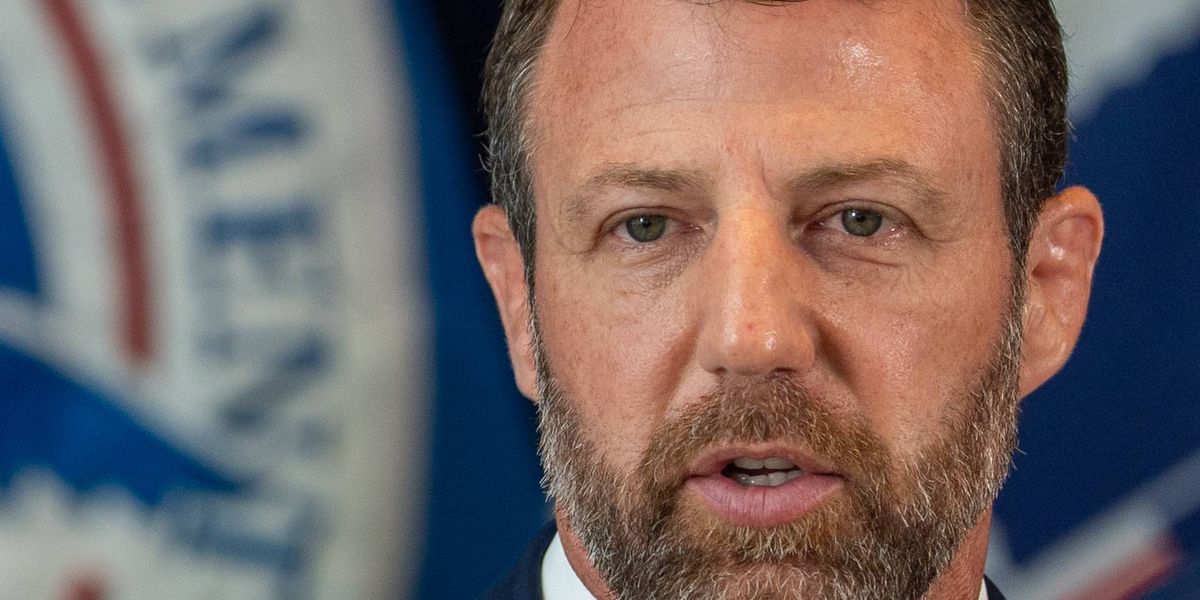
WASHINGTON (AP) – Markwayne Mullin’s appointment as Secretary of Homeland Security came with a promise: to steer the department away from the controversies that marked its handling of immigration under the previous administration. However, just months into his tenure, the department finds itself embroiled in renewed scrutiny after the deaths of three individuals during encounters with Immigration and Customs Enforcement (ICE) agents within a single week.
These tragic incidents represent the first significant challenge for Mullin. He had assured the public of a new direction for the department, which had faced instability under prior leadership and the stringent immigration policies of the Trump administration. As he confronts increasing violence, Mullin must navigate rising tensions in American cities while balancing demands from a White House eager to resume aggressive deportation efforts.
Democratic Rep. Seth Magaziner articulated this predicament on the House floor, waving a newspaper that highlighted the renewed controversies, stating, “Well, you’re back on the front page,” underscoring Mullin’s struggle to fulfill his promise of minimizing media attention on DHS.
Shift in Leadership Style from Kristi Noem
Mullin, a former senator from Oklahoma, was an unexpected choice to lead the expansive department following the dismissal of Kristi Noem, who faced criticism following the deadly confrontations involving federal immigration agents and American protesters in Minneapolis. Noem had aggressively pursued the Trump administration’s mass deportation agenda, notably visiting detention centers in El Salvador and controversially condemning the protesters involved in the Minneapolis shootings.
Frustration from President Trump over Noem’s management of a $200 million ad campaign and her handling of the Minneapolis incident ultimately led to her removal. In contrast, Mullin promised a different approach, emphasizing adherence to the president’s priorities while adopting a more discreet operational style. His first official trip as secretary focused on hurricane recovery efforts in North Carolina rather than immigration enforcement.
Under Mullin’s leadership, ICE has shifted away from high-profile immigration operations in urban areas to a more subdued enforcement strategy, successfully diverting media attention from the agency’s activities in the aftermath of Minneapolis. Additionally, Mullin has distanced the agency from plans to utilize warehouses for immigrant detentions.
Despite this pivot, ICE has continued to carry out arrests at a significant pace, arresting around 10,000 individuals in just five days at the end of June. The agency’s approach to legal immigration routes has also become increasingly restrictive.
ICE-Related Fatalities Challenge Mullin’s Strategy
However, the recent incidents mark a critical turning point for Mullin, who is now attempting to reconcile a flexible enforcement strategy with the urgent demands from the White House. Tom Warrick, a former counterterrorism official at DHS, commented on the difficulty of balancing these competing policy goals within the department.
Recent deadly encounters involving ICE agents in Houston and Maine, as well as a car crash in Florida related to an ICE chase, have reignited concerns about the agency’s operations. Mullin has remained silent on these deaths, with the department’s official statements offering scant information.
Despite this, Mullin has made strides to improve communication with Congress, reportedly sharing his cell phone number with members for direct dialogue. Following the second fatal incident in Maine, ICE was instructed to pause most traffic stops amid widespread criticism.
Trump’s Expectations Heighten Tensions within DHS
This decision, however, sparked ire among Trump supporters. Conservative influencers criticized Mullin for adhering to advice from Senator Susan Collins of Maine about the moratorium on traffic stops—further complicating his position. President Trump publicly contradicted this stance by insisting that ICE should not relinquish one of its most effective law enforcement tools: traffic stops.
In response, Mullin reiterated alignment with Trump, announcing that individuals in the country would continue to face arrest and deportation. As public scrutiny mounted, it became unclear whether the directive regarding traffic stops had been reinstated, highlighting the ongoing tension between Mullin’s efforts to maintain stability and the administration’s push for aggressive immigration enforcement.
Democratic representatives criticized Mullin’s leadership, expressing skepticism about the department’s transformation under his guidance. Representative Joaquin Castro of Texas emphasized the potential for ICE to be brought under control if the Secretary and the White House were committed to addressing the issues within the agency.
Conversely, Republican lawmakers defended Mullin’s approach, asserting that he was making efforts to promote a more measured tone within DHS. Rep. Andrew Garbarino of New York, who heads the Congressional Homeland Security Committee, called for a bipartisan briefing on ICE’s use-of-force policies, acknowledging widespread concern over the agency’s actions. While nobody is pleased that ICE has once again become a focal point in the news, the ongoing dynamics within DHS continue to unfold.
___
Associated Press writer Lisa Mascaro contributed to this report.
