


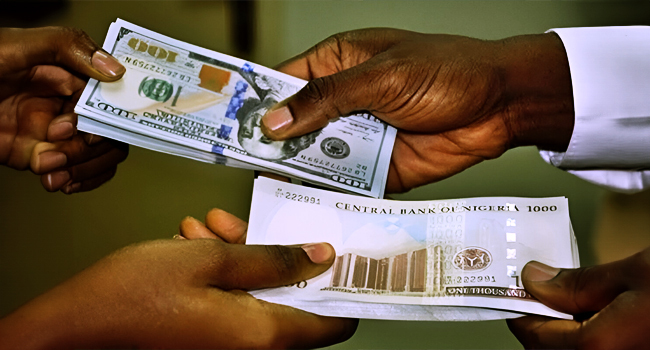
On Wednesday, the Nigerian Foreign Exchange Market (NFEM) witnessed a depreciation of the Naira against the US dollar, closing at N1,361.5/$ compared to N1,356.5/$ in the previous session. This shift highlights a significant slowdown in foreign exchange activities.
This information was sourced from the Central Bank of Nigeria (CBN) website.
The published data revealed that daily trading volume on official markets plummeted by approximately 57%, underscoring a substantial reduction in trading activities despite ongoing foreign currency inflows.
Market Trends and Performance
According to CBN statistics, while the Naira traded within a relatively tight range during the session, market volume experienced a sharp downturn. Intraday trading fluctuated between N1,357/$ and N1,361.5/$, with an average exchange rate for the day reported at N1,360.13/USD. Revenue for the NFEM dropped to $54.29 million, a significant decrease from the $125.69 million recorded in the previous session, as completed transactions fell from 125 to 74.
This marked decline in sales indicates a notable drop in trading activity within the official foreign exchange market, despite a moderate depreciation of the Naira.
Global Influences on the Naira
Global currency markets continued to react to developments in the United States and the Middle East, sustaining demand for the US dollar. The dollar is now approaching its highest level in over two months amid growing expectations that the U.S. Federal Reserve will implement further interest rate hikes. Ongoing concerns about inflation have prompted markets to consider the likelihood of additional monetary tightening before the year concludes. Additionally, geopolitical tensions in the Gulf region have reinforced the dollar’s appeal as a safe-haven asset, particularly following renewed warnings from U.S. President Donald Trump regarding Iran.
The robust dollar environment has created pressure on several emerging market currencies, including the Naira.
Despite this slight depreciation of the exchange rate, Nigeria’s foreign exchange reserves have continued to grow, providing further support to the market. As of June 16, 2026, CBN data indicated that the country’s reserves rose to $50.89 billion, driven by sustained foreign exchange inflows and effective accumulation efforts.
Reserves and Market Confidence
The increase in Nigeria’s foreign exchange reserves enhances the CBN’s capacity to bolster market liquidity and instill confidence in the foreign exchange framework, particularly during periods of global uncertainty.
As reported by Nairametrics, Nigeria’s foreign exchange reserves have seen an increase of more than $1 billion in the first half of June 2026. This steady accumulation is part of ongoing efforts by monetary authorities to enhance foreign exchange liquidity and promote market stability. Earlier reports indicated that reserves had declined from over $50.08 billion on March 12 to $49.61 billion by March 23, 2026. However, in January 2026, reserves reportedly increased by approximately $509 million in the first 22 days, reflecting improved foreign currency inflows during that period.
Overall, Nigeria’s foreign exchange reserves have seen significant growth over the past year, following reforms initiated by the CBN aimed at stabilizing the exchange rate and enhancing market conditions.
