


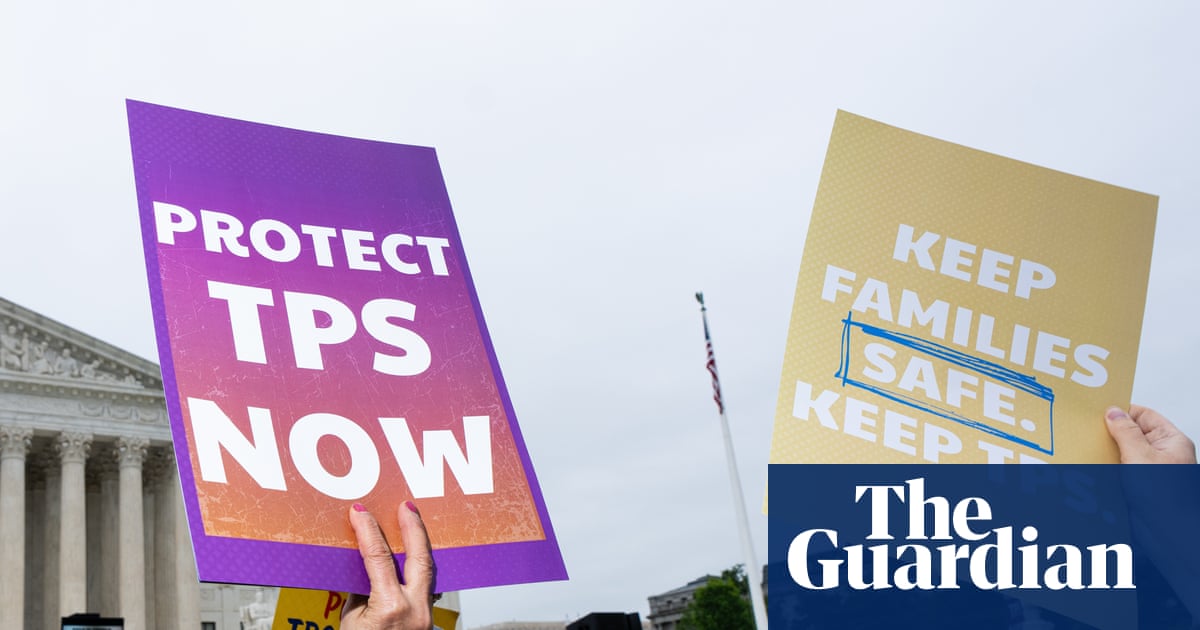
Controversy Surrounds Supreme Court Decisions Impacting Immigrant Protections
On Thursday, lawmakers and immigrant advocacy organizations sharply criticized two U.S. Supreme Court rulings that significantly dismantled specific immigrant protections and redefined the asylum process. This decision has drawn heated responses from various advocacy groups and legislators.
Reactions to the Court’s Rulings
A coalition of advocacy groups and Congressional representatives labeled the court’s decisions as “disastrous” and “cruel.” In contrast, the Trump administration, along with Republican lawmakers and anti-immigrant factions, expressed approval of the rulings. Democratic Representative Delia Ramirez from Illinois stated, “Today’s decisions by Trump’s supporters on the Supreme Court deny immigrants of their internationally recognized human rights and advance an authoritarian, white supremacist agenda,” highlighting the detrimental impact on more than 350,000 Temporary Protected Status (TPS) holders.
Stripping Temporary Protected Status
The Supreme Court’s ruling significantly affects Haitians and Syrians, removing their Temporary Protected Status, which previously allowed them to live and work legally in the United States without fear of deportation. This protective status was designed for individuals from countries facing violence or instability. Despite ongoing warnings from the State Department against travel to these nations due to escalating violence, designated TPS holders now face the looming threat of deportation, even while their applications for alternative immigration statuses are under review.
Concerns for Vulnerable Populations
Attorneys Jeff Pipoli and Andy Tauber, representing Haitian TPS holders, remarked that this decision could lead to “violent and unnecessary deaths of thousands of innocent people.” They emphasized how the ruling jeopardizes the safety of individuals who fled their homelands in search of a stable and secure existence.
Political Backlash Over Rulings
The unanimous sentiment among many Democratic senators and several Republican lawmakers is that the 6-3 ruling on TPS endangers hundreds of thousands of individuals. Under the current administration, the Department of Homeland Security (DHS) had classified their home countries as unsafe. However, the Trump administration has taken steps to dismantle various national programs aimed at protecting immigrants. Last year, the Supreme Court allowed the removal of TPS from over 300,000 Venezuelans, raising concerns about broader implications for additional TPS holders across various nations.
Potential Future Implications of the Decisions
Analysts are increasingly alarmed that the court’s recent decision may pave the way for further reductions in TPS for all eligible countries, potentially resulting in the largest undocumented immigrant population in U.S. history. “This ruling opens the door for the president’s broader campaign to eliminate TPS for approximately 1.3 million people,” cautioned Insha Rahman, president of the Vera Institute of Justice. “It illustrates a troubling reality: countless immigrants, who have contributed significantly to their communities, remain in precarious temporary statuses subject to political whims.”
Impact on Asylum Policies
The Supreme Court’s decisions extend beyond TPS to fundamentally alter asylum policies at the U.S.-Mexico border. The court ruled in a 6-3 decision that U.S. officials may turn away asylum seekers at the southern border and may indefinitely prevent individuals from pursuing asylum claims unless they are physically within U.S. territory. Immigrant rights advocates, who initially filed suit against the previous administration’s practice of “metering,” argued that these policies disrupted safe entry for asylum seekers and exposed them to dangerous conditions in Mexico.
Legal and Human Rights Concerns
Organizations like Al Otro Lado have raised alarms about the implications of these rulings on international law and human rights. Executive Director Erika Pinheiro noted that the decisions could weaken the United States’ position as a global leader in refugee rights and could encourage other countries to adopt similar restrictive measures against asylum seekers. She emphasized that, “in a world facing increasing conflict and climate crises, bolstering defenses to exclude the vulnerable will lead to preventable loss of life.”
