


On Thursday, the Supreme Court ruled that President Trump possesses the legal authority to terminate Temporary Protected Status (TPS) for Haitian and Syrian immigrants residing in the United States. Initiated in 1990 under then-President George H.W. Bush, this program has remained in effect for 36 years.
Local immigrant advocacy groups express uncertainty regarding the program’s immediate future, but they agree it will significantly affect families and the economy in Massachusetts.
Massachusetts Hosts 45,000 Haitians Under TPS
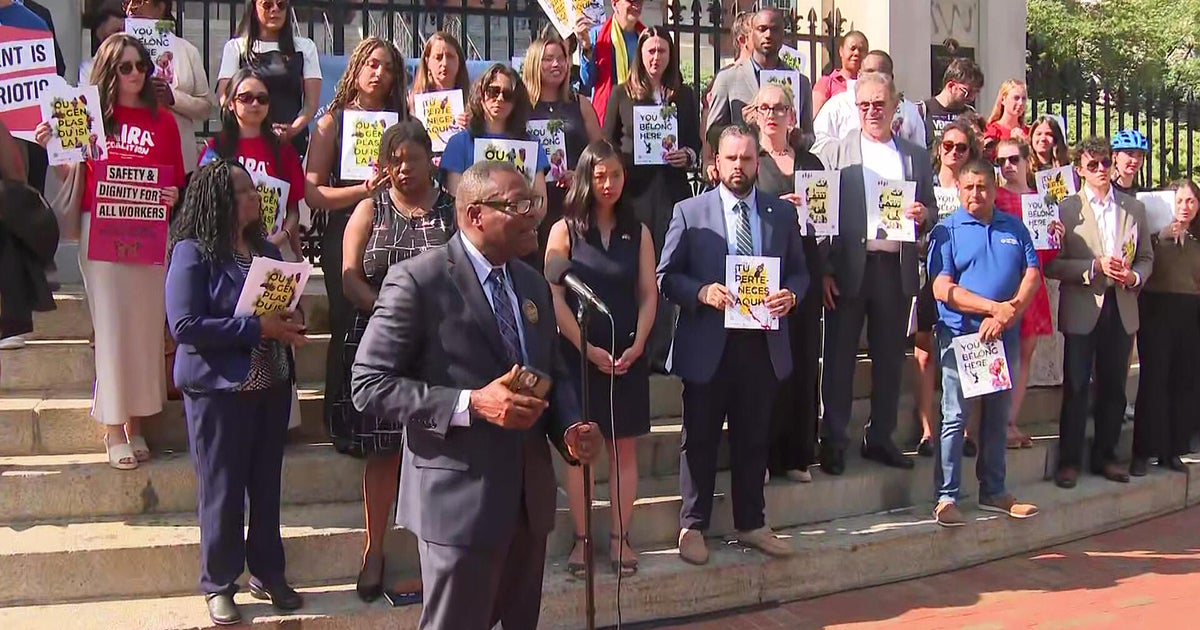
Estimates suggest that around 45,000 Haitians in Massachusetts currently benefit from Temporary Protected Status. “Something really terrible happened this morning,” stated Governor Healey to a subdued audience gathered outside the state Capitol. She added that the Supreme Court’s decision “essentially approved the callous and inhumane treatment of immigrants.”
Dr. Gerard Gabor, director of the Immigrant and Family Services Institute, urged action, saying, “It’s time for all of us to speak up and affirm that this is our country—a nation built by immigrants.” His remarks, highlighted by his personal experience as a Haitian immigrant, were met with enthusiastic applause.
If TPS is revoked, the immediate implications for those affected are unclear, but it poses a threat to their legal right to work in the U.S. Additionally, many could face deportation despite having previously held lawful status and possessing clean criminal records.
Jeffrey Thieleman, president and CEO of the New England Institute of International Studies, emphasized the deep-rooted nature of these individuals within their communities. “They own businesses, have jobs, and are parents and grandparents,” he noted. Thieleman also warned that under potential TS termination, families might be torn apart, with some Haitians facing deportation while their U.S.-born children remain in the country. “That scenario would be heartbreaking,” he remarked.
Economic Consequences of the Supreme Court Ruling
Experts caution that the economic repercussions could be profound. Approximately 1,500 nursing home employees in Massachusetts are Haitians who qualify for TPS, according to state data.
Chris White, director of Road to Responsibility—a program providing care for adults with disabilities—has already witnessed the ruling’s adverse effects. Since May 2025, his organization has lost 102 Haitian workers due to changing immigration laws, with an additional 28 expected departures resulting from the recent judgment.
“This is a very challenging situation and poses a substantial budget crisis for us,” White explained. “The ruling will lead to increased overtime pay and staffing costs for employment agencies.” Moreover, he expressed frustration at the lack of American citizens willing to take these positions, stating, “We rarely receive applications, particularly from American-born individuals.”
Meanwhile, the next steps for those under TPS remain uncertain. State officials encourage anyone concerned about their immigration status to explore resources outlined by their legal counsel or directly on the state’s website.
