


Supreme Court Decision Stirs Controversy Over Election Integrity
WASHINGTON — The Supreme Court has repeatedly warned judges against intervening in ongoing elections, yet its recent ruling in a redistricting case has prompted accusations of precisely that. The court’s decision favored Republicans in a contentious battle over congressional maps, drawing scrutiny as the midterm elections approach.
Republican States Rethink Redistricting Strategies
This ruling has ignited a flurry of activity among Republican-led states looking to reshape congressional districts to enhance their electoral advantage. As the nation gears up for midterm elections, the outcome could significantly influence which party maintains control of the House of Representatives.
Decision Issued in Crucial Timing
The court’s ruling is particularly impactful as it arrived less than three weeks before Louisiana’s congressional primary elections, following more than a year of deliberation. Both Louisiana and Alabama have postponed primary elections to redraw their districts, raising the potential for other states to follow suit in their quest for partisan advantage.
Conservative Majority Expands Redistricting Powers
In its 6-3 decision, the conservative majority of the court expedited requests from Louisiana and Alabama to initiate redistricting. This move enables the states to create new maps that could undermine Democratic-majority black districts, inciting further debate regarding fairness in the electoral process.
Legal Challenges Emerge as Elections Loom
Complications arose in Louisiana when some ballots were already returned as Governor Jeff Landry announced the cancellation of a House election originally set for May 16. In Alabama, the primary, previously scheduled for May 19, has been postponed to August in affected districts.
Public Trust in the Judiciary Declines
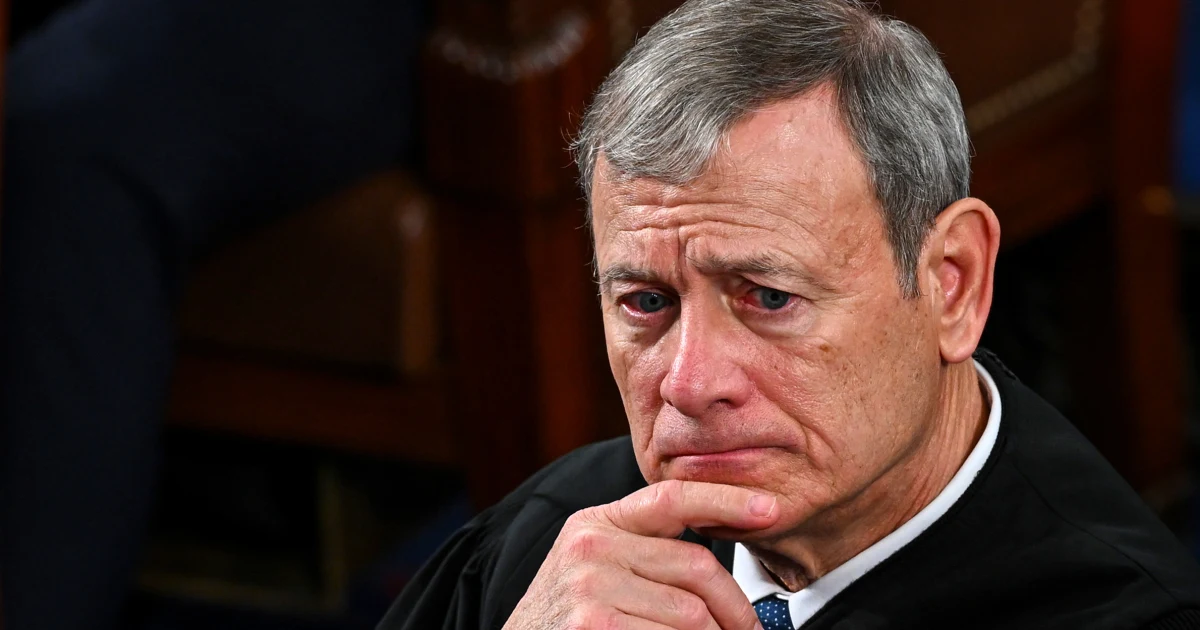
The court’s intervention has reignited a discussion sparked by Chief Justice John Roberts, who lamented last week that public perception views judges as political actors. A recent NBC News survey revealed that trust in the Supreme Court is at a historical low, fuelled in part by its rulings favoring the Trump administration.
Criticism of Judicial Intervention Grows
Liberal critics argue that the court’s actions display a disregard for equitable application of the law, referencing historic rulings that condemned judges for altering electoral rules mid-process. Kareem Clayton, a lawyer with the Brennan Center for Justice, criticized the ruling as a “blatant exercise of power,” highlighting the judiciary’s increasingly pronounced role in midterm elections.
Implications of the Purcell Doctrine
The Supreme Court frequently invokes the 2006 “Purcell Doctrine,” a principle asserting that judges should refrain from changing election rules close to an election. This doctrine came into play when the court blocked Arizona’s move to impose a photo ID requirement for voter registration, emphasizing the risk of voter confusion as elections approach.
Disparities in Judicial Reasoning and Rulings
In both the Louisiana and Alabama rulings that enabled redistricting efforts, the Supreme Court’s majority did not clarify its rationale or mention the Purcell Doctrine. During a dissenting opinion, Justice Ketanji Brown Jackson pointedly referenced this principle as a reason to deny intervention. Meanwhile, Justice Samuel Alito rebuffed allegations of judicial overreach as “baseless and irresponsible.”
Controversial Trends in Judicial Decisions
Derek Muller, an election law expert, defended the court’s approach as aligned with the Purcell principle, asserting its non-applicability when lifting injunctions. Other experts noted the evolving interpretation of the Purcell doctrine, suggesting it has become ambiguous and unevenly applied, ultimately leading to perceptions of the court consistently favoring one political party over another.
As the Supreme Court navigates these intricate legal landscapes, experts continue to emphasize the importance of equitable treatment in electoral matters, raising questions about the future implications for democracy in the United States.
