


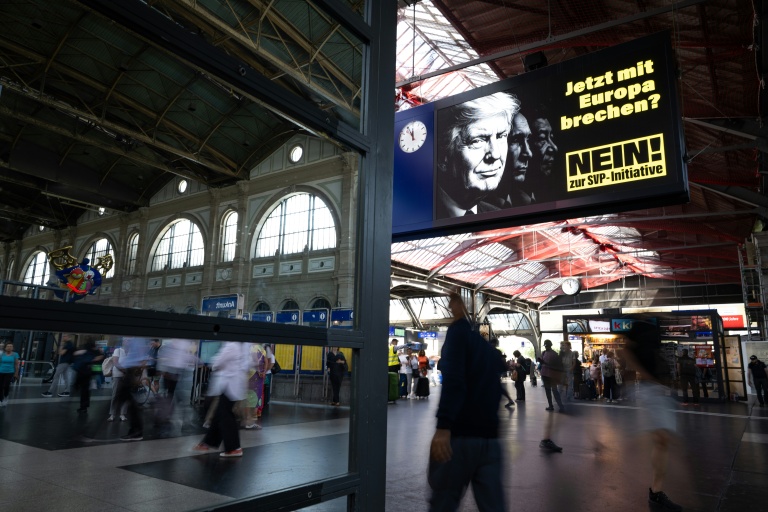
Swiss Voters Face Critical Referendum on Population Controls and Military Service
Swiss citizens will cast their votes on Sunday regarding a controversial referendum that proposes restrictions on immigration and conscientious objection to military service. This pivotal decision reflects the nation’s broader struggles with demographic changes and geopolitical pressures.
Opinion surveys indicate that both issues—capping the population and limiting military service alternatives—will likely result in a tightly contested vote under Switzerland’s unique direct democracy framework.
Voting stations will be accessible for a limited time on Sunday morning, closing at noon (10:00 GMT). While many voters are expected to submit their ballots by mail beforehand, initial results are anticipated by mid-afternoon.
Heightened tensions surround the initiative titled “No to Switzerland, a country with a population of 10 million!” spearheaded by the far-right Swiss People’s Party (SVP). This proposal aims to curb the population of the affluent Alpine nation, currently at 9.1 million, by limiting growth to a maximum of 10 million by 2050.
If approved, this initiative would institute stricter immigration policies in a country where over a quarter of residents are foreign nationals. The SVP contends that “mass immigration” has exacerbated challenges such as housing shortages, high rental costs, and congested public transportation systems, requiring urgent remedial measures.
SVP MP Ivan Pahad expressed concerns, asserting that “Switzerland is a small country that cannot expand” and emphasizing the need to avoid becoming a sanctuary for all of Europe’s immigrants.
However, critics argue that the proposal, if enacted, could lead to chaos and have a detrimental effect on Switzerland’s economy and its relationship with the European Union, its key trading partner. Swiss Justice Minister Beat Jans has underscored the high stakes, suggesting that approval of the referendum could signal Switzerland’s potential “exit” from the EU.
This initiative already faces extensive pushback from a coalition of government officials, parliament members, and various sectors of the economy. Although earlier polls indicated a competitive landscape, recent data suggest a waning support for the proposal.
For the initiative to pass, it must secure not only a majority of the votes cast but also a majority across at least half of Switzerland’s 26 cantons.
Debate Over Conscientious Objection to Military Service
In addition to the population cap, Switzerland will also vote on a parliamentary bill aimed at making civilian service less appealing amid rising geopolitical tensions, particularly due to the ongoing conflict in Ukraine. This bill is backed by left-leaning political factions advocating for the rights of conscientious objectors.
Opponents of the bill express fears that if enacted, it could ultimately lead to the elimination of options for those wishing to opt-out of military service. Polls indicate this issue may also be closely contested.
In Switzerland, men are obligated to serve in the military, participating in a unique militia system that requires at least four months of service followed by periodic call-ups for retraining over a decade. Since 1996, individuals who object on moral grounds have been permitted to fulfill their duties through civilian service as an alternative.
The number of those choosing civilian service has risen significantly since the simplification of access to private services in 2009, prompting government officials to deem this trend “troublesome.” As the Swiss electorate prepares to make these crucial choices, the implications for the nation’s future are substantial and far-reaching.
