


Tax Reforms Targeting Nigeria’s Economic Growth Defended by Vice President
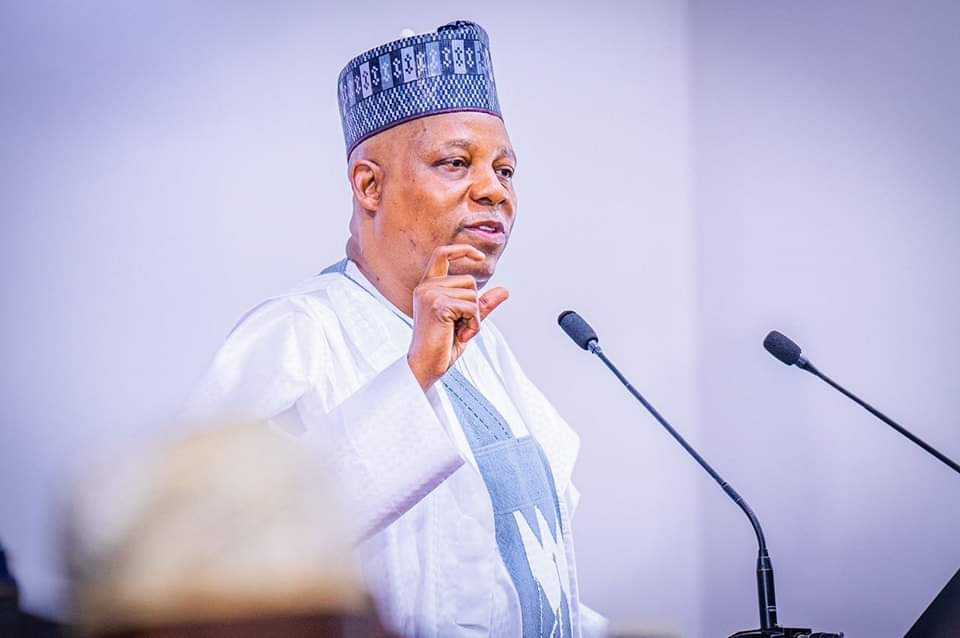
Nigeria’s Vice President Kassim Shettima has stepped forward to support the federal government’s tax reforms, emphasizing their role as pro-people and pro-business initiatives designed to lift millions of citizens out of poverty while steering the nation towards sustainable economic development.
In a speech delivered on behalf of President Bola Tinubu’s Special Adviser on Economic Affairs, Tope Fasua, during the 28th Annual Tax Conference of the Chartered Institute of Taxation of Nigeria in Abuja, Shettima outlined the objectives behind the current fiscal reforms. He articulated the government’s vision for an economy that incentivizes productivity, fosters innovation, and upholds transparency.
Shettima painted a hopeful future for Nigeria, where, irrespective of their social backgrounds, all citizens can prosper. He expressed aspirations for a nation where the children of petty traders in Kano and farmers in Ekiti can thrive in an economy that showcases both raw materials and innovative outputs.
The Vice President expressed optimism for a future where locally-made products achieve global competitiveness while Nigeria establishes a tax administration that serves as a model for other African nations. However, he noted significant challenges remain, particularly in winning the trust of Nigerians regarding the reforms.
Shettima acknowledged the widespread skepticism surrounding the perceived benefits of the new tax measures. He explained that under this revamped system, individuals earning less than N1 million annually would be exempt from taxation, and small to medium-sized enterprises with turnovers below N100 million would continue to enjoy tax exemptions. He emphasized the government’s commitment to economic inclusivity during a time when many are doubtful of such groundbreaking initiatives.
The Vice President reiterated the importance of proactive public awareness campaigns to counter misinformation regarding the reforms. According to him, sharing accurate information is crucial to refuting misleading narratives that threaten to overshadow the government’s intentions.
In addition to these remarks, Innocent Ohagwa, the 17th President and Chairman of the Chartered Institute of Taxation of Nigeria, characterized the newly implemented tax reforms as the most comprehensive overhaul of Nigeria’s fiscal structure in over three decades. He outlined the ambitious goal of transforming Nigeria into a $1 trillion economy by the decade’s end.
Ohagwa pointed out that Nigeria’s historical dependency on borrowing and low revenue returns is beginning to shift thanks to these new reforms, which aim to enhance accountability and curb illicit financial flows. He highlighted the significant improvement in the country’s revenue-to-debt service ratio, dropping from 120% in December 2022 to a forecasted 68% by the end of 2025.
Power Minister Joseph Tegbe commended the ongoing reforms, citing the necessity for radical changes across all sectors. Meanwhile, Senator Adams Oshiomhole echoed the call for a more equitable tax system, underscoring taxation’s vital role in governance and societal advancement. He advocated for the wealthy, particularly high-income earners, to contribute more significantly to national development through higher tax liabilities.
As the conference progressed, Ms. Caroline Ndubisi, the Conference Chairperson and National President of the Women in Taxation Association, underscored the significance of the gathering as a platform for shaping Nigeria’s tax future. She emphasized the essential role of digital transformation in tax administration and the need for an inclusive system that addresses the needs of all sectors.
The conference theme, “Tax Reform and Global Relevance: Positioning Nigeria’s Tax System for a Sustainable Future,” drove home the participants’ commitment to enhancing transparency, boosting public trust in fiscal governance, and ensuring that Nigeria’s tax system aligns with global standards.
