


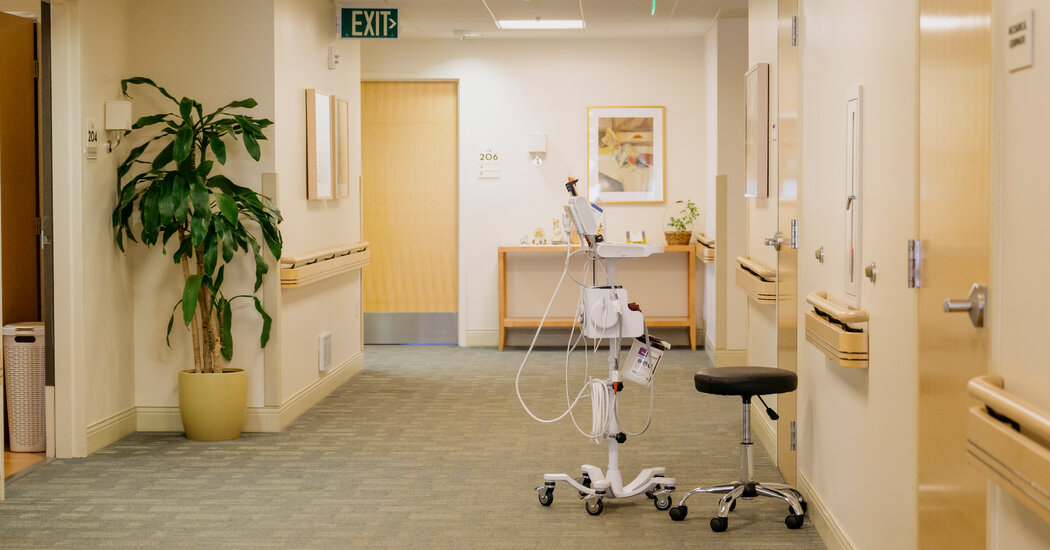
Senior Living Community Faces Caregiver Shortage Amid Immigration Policy Changes
Channing House, a senior living community located just a mile from Stanford University, boasts a rich tapestry of residents, including pioneering scientists and technology executives. However, a recent meeting revealed a pressing issue: the community is grappling with a significant loss of caregivers tied to shifting immigration policies.
“Our workforce has been severely disrupted; relationships have been severed, and lives are being upended,” asserted Rhonda Beckedahl, the community’s chief executive. In June, she organized a rally that drew around half of Channing House’s 250 residents, highlighting the urgency of the situation.
The intersection of aggressive immigration policies from the Trump administration and an aging population is creating a perfect storm. As Americans live longer and the demand for elderly care escalates, the senior care industry is already facing chronic labor shortages.
Currently, approximately 70 million Americans are aged 65 or older, with estimates indicating that about 70% of this population will require long-term care at some point in their lives. Immigrants play a vital role in meeting this growing demand, filling positions as nurses, nutritionists, fitness instructors, and maintenance technicians. Many undocumented immigrants also provide informal care, further complicating the situation.
Beckedahl noted that Channing House has already laid off several workers who benefitted from the Deferred Action for Childhood Arrivals (DACA) program due to expired work permits and the lack of government renewal. This troubling trend may worsen, as a recent Supreme Court decision upholding the administration’s authority to terminate Temporary Protected Status (TPS) for certain nationalities could strip Channing House of more essential staff.
Long-time employees, including several DACA and TPS recipients, voiced their concerns during the rally. Gloria Castellanos, the dining director, emphasized her desire to continue serving the residents she knows well. “I just want the opportunity to keep my job,” she lamented. Residents expressed outrage at the potential loss of caregivers who have lived and worked in the United States for years, highlighting the personal impact of these policy changes.
The auditorium reverberated with suggestions for action: writing letters to congresspersons, contacting the Department of Homeland Security, and donating to employee funds to support affected workers. David Golden, an award-winning chemist and former vice president of the nonprofit research institute SRI, echoed the frustrations of many. He indicated that pushing for immigration reforms under the current administration might be futile.
The Trump administration has ramped up scrutiny of DACA recipients, prolonging the renewal process for work permits, which could force thousands out of the workforce temporarily or permanently. In light of a recent Supreme Court ruling affecting TPS, many workers face the loss of protections they have relied upon for years. The situation is further exacerbated by the ongoing strains on the senior care sector, which was already struggling with workforce shortages. According to recent surveys, over half of nursing homes reported turning away prospective residents due to staff inadequacies.
As Adam Scott, CEO of Hebrew Senior Life, pointed out, many immigrant workers in this sector are integral to the care provided to seniors. Since the beginning of the Trump administration, policy changes have resulted in significant layoffs at senior living facilities, further stressing an already burdened industry. The emotional toll is palpable as caregivers who form long-standing relationships with residents prepare to depart, leaving an inevitable gap in quality care.
Experts like Brian McGarry note that solutions typically involve increasing wages to attract more workers, but the financial limitations of Medicaid reimbursement rates hinder this approach. Meanwhile, concerns mount about the potential repercussions of ongoing immigration barriers, threatening the stability of care for one of the most vulnerable populations in society. Attendees at Channing House are left to grapple with the reality that their caregivers, who have become like family, might soon vanish from their lives due to forces beyond their control.
