


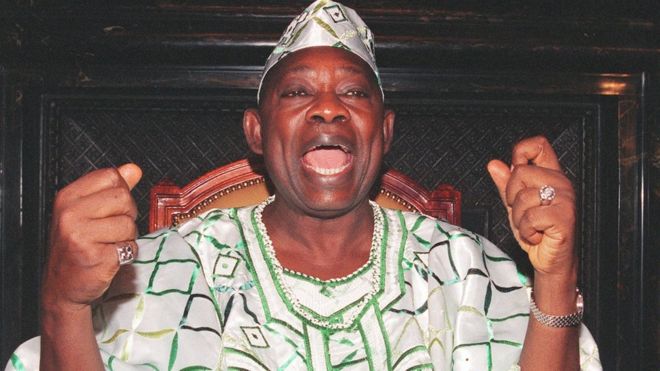
June 12 Marks Democracy Day Celebrations in Nigeria
Today, Nigeria commemorates the anniversary of June 12 as Democracy Day. For the past 25 years, advocates have urged the Federal Government to recognize this date as a national holiday in honor of MKO Abiola. Last year, in a surprising turn, President Muhammadu Buhari, who transitioned from a military dictator to a democratic leader, formally acknowledged June 12, spotlighting the injustices surrounding the annulled 1993 election and taking significant steps to rectify them.
Shifts in National Observances
This observance effectively replaces May 29 as the designated Democracy Day, a decision which may explain the relatively subdued inauguration ceremony that accompanied the president’s recent second-term start. The event lacked the fervor typically expected, failing to ignite a sense of renewed patriotism among citizens.
Acknowledging Democracy’s Journey
As May 29 is now relegated to a footnote alongside October 1—Nigeria’s Independence Day—it reflects a collective decision to honor June 12 as a pivotal moment in the country’s democratic evolution. Remarkably, Nigeria has enjoyed two uninterrupted decades of democratic governance, though not without its visible imperfections and challenges that occasionally challenge proponents’ faith in the system.
Current Challenges in Political Discourse
Despite some voices asserting the existence of democracy in Nigeria, many remain skeptical. Thankfully, the days of military rule characterized by tyranny are behind us, allowing for open debate and expression, even if it occasionally descends into vitriol on unregulated platforms. Meanwhile, armed groups, masked as ‘bandits’ and kidnappers, continue to pose a grave threat, leaving a significant portion of the populace feeling insecure.
A Dual Nature of Democracy
There exists a notion among some that our democracy is intertwined with a degree of authoritarianism, characterized by impunity and a blatant misuse of power. Nevertheless, today should be celebrated as a tribute to MKO Abiola, akin to Martin Luther King Jr. Day in the United States. Abiola remains a seminal figure in Nigeria’s political landscape, having won the 1993 election that was ultimately annulled. His ultimate sacrifice in pursuit of democracy underscores the difficult yet successful return to civilian rule on May 29, 1999.
Reflections on Abiola’s Legacy
The resilience of Nigerian democracy over the past two decades is a testament to a higher purpose at play, despite our weaknesses. However, we must reflect on the lessons from Abiola’s life. President Buhari emphasized the collective responsibility to prevent a repeat of the electoral chaos witnessed in June 1993. Embracing the principles of fair governance requires a commitment from all stakeholders to adhere to the democratic process.
Humanistic Leadership and Empathy
While MKO Abiola may not have been flawless, his vision and leadership style exemplified the core values of effective governance rooted in democracy and compassion for all Nigerians. His commitment to inclusivity across ethnic and religious lines highlights the aspirations that currently elude many of today’s leaders. Abiola’s legacy continues to emphasize that a true leader must prioritize the well-being of the people.
Abiola’s Journey from Humble Beginnings
MKO Abiola, born on August 24, 1937, in Abeokuta, Ogun State, rose from poverty to prominence. As the 23rd child in his family, he overcame significant adversity and transformed himself into one of Nigeria’s most influential figures. His upbringing embodies the classic rags-to-riches narrative, showcasing his determination to foster hope among his fellow citizens. Philanthropy was the cornerstone of his life philosophy, underscoring his belief that giving would ultimately yield returns.
Lessons in Leadership and Humanity
Abiola’s remarkable empathy set him apart as a leader who fervently opposed injustice and took tangible steps to combat suffering. His dedication to providing essential resources for those around him exemplified a far-reaching commitment to uplift others’ lives. Personal anecdotes underscore his unique blend of humility and grandeur, from lavish travel accommodations for collaborators to prioritizing the needs of his staff. Such attributes define the legacy of MKO Abiola—an enduring symbol of leadership and compassionate governance.
