


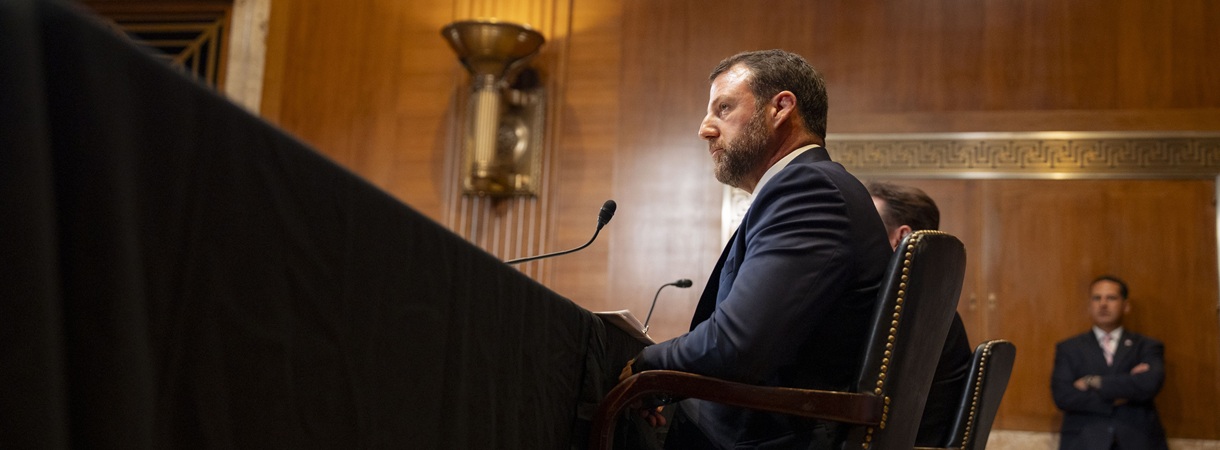
Secretary Mullin Faces Congressional Scrutiny Over Immigration Policies
Mark Wayne Mullin, the U.S. Secretary of Homeland Security, encountered pointed questions from Congress this week as he reiterated threats to shut down international air traffic in so-called sanctuary cities, including Chicago, Los Angeles, and New York City. This warning, part of a broader strategy by the Trump administration, comes amid escalating protests and confrontations in New Jersey concerning the conditions at the Delaney Hall Detention Center, which is operated by U.S. Immigration and Customs Enforcement (ICE) to detain noncitizens.
Impact of Proposed Air Traffic Disruptions on Communities
This recent threat highlights the administration’s ongoing efforts to target cities and states that challenge mass deportation policies or refuse to engage with ICE. Diverting Customs and Border Protection (CBP) agents from key international airports could create significant disruptions for travelers and major industries, potentially stranding countless Americans at airports.
Public Sentiment and Economic Concerns
Mullin’s threat emerges at a time when public sentiment is increasingly critical of both the current economic situation and existing immigration policies. If executed, such a strategy would not only negatively impact sanctuary cities and immigrants opposed to President Trump’s agenda, but it would also adversely affect hundreds of thousands of American citizens reliant on air travel.
Opposition and Reactions from Industry Experts
Despite facing dissent from within his Cabinet and warnings from experts in the aviation industry about executing what some have termed a naive approach, Mullin remained resolute. Even if the administration ultimately refrains from following through on its threats, this latest rhetoric is part of a broader, longstanding campaign against sanctuary jurisdictions.
Previous Measures Against Sanctuary Cities
The administration has previously dispatched militia forces and the National Guard to locations like Los Angeles and Chicago in a bid to confront ongoing resistance to large-scale deportation efforts. Concurrently, it has pursued legislation that could strip federal funding from states that do not cooperate with deportation measures, and the Department of Justice has taken legal action based on alleged noncompliance with immigration requests. Recently, the Senate approved a spending package that allocates an additional $70 billion to ICE and CBP, which may bolster enforcement within jurisdictions that restrict cooperation.
Legal Framework Supporting State Rights
However, the U.S. Constitution grants state and local governments the authority to make decisions regarding law enforcement and public safety that serve their communities best. This includes the right to decline cooperation with ICE in executing mass deportations. The Tenth Amendment ensures that the federal government cannot compel state or local authorities to engage with ICE, and numerous federal courts have affirmed that while states cannot obstruct federal immigration enforcement, they are not obligated to cooperate.
Local Law Enforcement’s Opposition to Federal Policies
An increasing number of local law enforcement leaders are voicing their opposition to the Trump administration’s tactics of intimidation against jurisdictions unwilling to cooperate. Sheriffs in Florida, for example, have expressed concerns that large-scale deportations of non-threatening individuals could undermine public safety and erode trust in law enforcement. Similar sentiments have emerged from sheriffs in states like Maine and North Carolina, who argue that cooperation with federal authorities could impede their ability to maintain professional law enforcement standards.
A New Approach to Immigration Policy
The American Immigration Council has recently introduced a blueprint for how federal immigration agencies can better engage with states. Their report, “Restoring Credibility and Humanity in Immigration Enforcement,” outlines a model for partnership that emphasizes the need for federal support to states with high immigrant populations. This collaborative approach not only aims to comply with immigration laws but also to nurture vibrant immigrant communities, thus fostering safety and mutual respect.
For decades, ICE has relied on local law enforcement for immigration enforcement, often involving informal agreements with local authorities. However, recent coercive tactics from the Trump administration have led many states to withdraw from cooperation. To rebuild trust and community safety, Congress must focus on funding state-level support services and working collaboratively to target only those individuals who present genuine security risks.
