


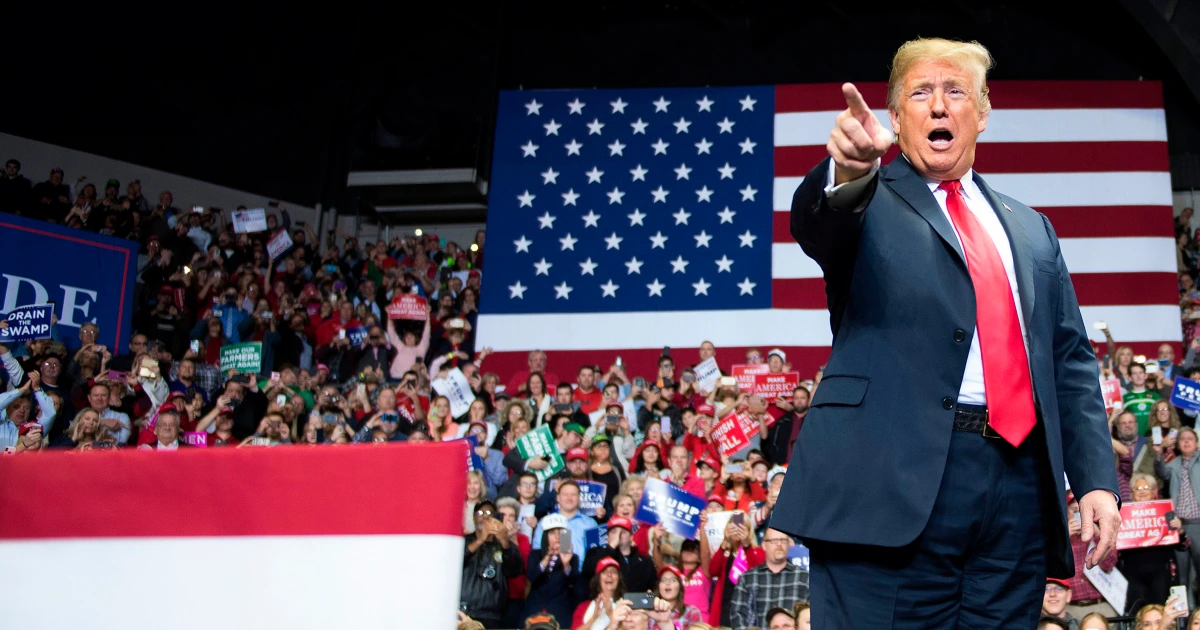
President Donald Trump is intensifying his efforts to challenge Republican lawmakers who opposed key elements of his agenda. The focus shifts to the Indiana Senate primary on Tuesday, where Trump and his allies aim to unseat seven Republican state senators who had voted against a significant redistricting plan last year.
These primary races are among the most closely monitored contests in Indiana and Ohio. Voters in these states face a critical decision: whether to penalize lawmakers who undermined Trump’s attempts to solidify the Republican Party’s fragile majority in the House of Representatives. These primaries also serve as a precursor to pivotal elections scheduled for this fall.
Trump’s Strategy in Indiana
It’s rare for a state election to command national attention, but President Trump’s influence is evident as he works to unseat nearly 20% of Indiana’s Senate caucus. He has endorsed challengers against seven out of eight state senators running for re-election, targeting those who opposed his redistricting proposals, thereby altering the dynamic for well-established incumbents. His backing extends to Republicans who supported the redistricting as well, including two incumbents facing primary challenges from the right.
Recent data from AdImpact indicates that Trump has invested $11.8 million on advertising for these primary contests, representing a significant increase compared to typical campaign spending. Just $500,000 was allocated for Indiana Senate ads during the 2024 election cycle.
Hoosier Leadership for America, linked to Republican Sen. Jim Banks, has emerged as a major external spender, committing nearly $5 million to advertising efforts. Additionally, the American Leadership PAC, associated with Donald Trump Jr.’s top adviser and Vice President J.D. Vance, has added over $3 million in ad spending.
Some ads from Hoosier Leadership for America have sparked controversy, notably comparing some candidates to soft toilet paper, while others mock the age of a sitting Congress member. Despite the criticisms directed toward incumbents, many ads primarily laud challengers who emphasize their connections to Trump, as evidenced by an ad from U.S. Rep. Michelle Davis that mentions Trump four times in just 15 seconds.
Last year, the White House exerted considerable pressure on Indiana Republicans to maintain discipline during the redistricting process. The repercussions of that pressure remain to be seen as voters respond to Trump’s current tactics aimed at punishing dissenters.
Ohio’s Key Contests Draw Attention
While Tuesday’s primaries in Ohio may not hold much suspense for the gubernatorial and Senate races, their outcomes will have lingering implications for elections in the coming months. Republican Vivek Ramaswamy, supported by Trump and the Ohio GOP, is favored to win the governor’s race against a controversial conservative challenger who has attacked Ramaswamy’s Indian heritage. Meanwhile, former state health director Amy Acton stands as the major Democratic contender.
The special Senate race to complete the term of Vice President J.D. Vance is nearing resolution. Appointed Republican Sen. Jon Husted and former Democratic Sen. Sherrod Brown have both been actively campaigning for the general election. This race is one of several in red states that Democrats see as critical to their goal of reclaiming a Senate majority.
The primary elections will also shape several competitive U.S. House races this fall. A key contest is in Ohio’s 9th Congressional District, where Democratic Rep. Marcy Kaptur faces challenges from Republicans eager to reclaim historically Republican-leaning territory, particularly after redistricting tilted the district further right.
The crowded Republican primary includes Derek Melin, a former state representative; Madison Sheehan, a former deputy ICE director; State Representative Josh Williams; and Alea Nadeem of the Air National Guard. So far, Trump has not indicated support for any candidates in this race.
Contested Races and Challengers
As of now, Congressman Dan Crenshaw is the only incumbent Republican to lose a primary this election cycle, although a few others find themselves in tight contests. In states like Indiana and Ohio, many incumbents face challengers who lack the financial resources to mount effective campaigns.
In Indiana’s 4th Congressional District, incumbent U.S. Rep. Jim Baird is engaged in a close race against state Rep. Craig Haggard. As the campaign advances, outside spending has surged, with significant contributions from pro-cryptocurrency groups backing Baird, alongside funding from other political interests.
Michigan’s Critical Senate Race
Michigan voters are preparing to decide on a vacant state Senate seat in the Saginaw Bay Area that was previously held by Democratic Rep. Kristen McDonald Rivett, who resigned after her election to Congress in 2024. This race is pivotal in gauging voter sentiments in a key battleground state.
Democrats have nominated Chedrick Greene, a Marine veteran and firefighter, while Republicans have selected former prosecutor Jason Tunney. Michigan Governor Gretchen Whitmer has rallied support for Greene, and former Secretary of Transportation Pete Buttigieg has also campaigned alongside him. Tunney has partnered with Republican U.S. Rep. John James, who is running for governor, to bolster his campaign.
The outcome of this race could significantly impact the balance of power in the Michigan Senate. A Republican victory would create an even split in the chamber, with 19 Democrats and 19 Republicans, allowing Michigan’s Democratic lieutenant governor to cast the tie-breaking vote.
