


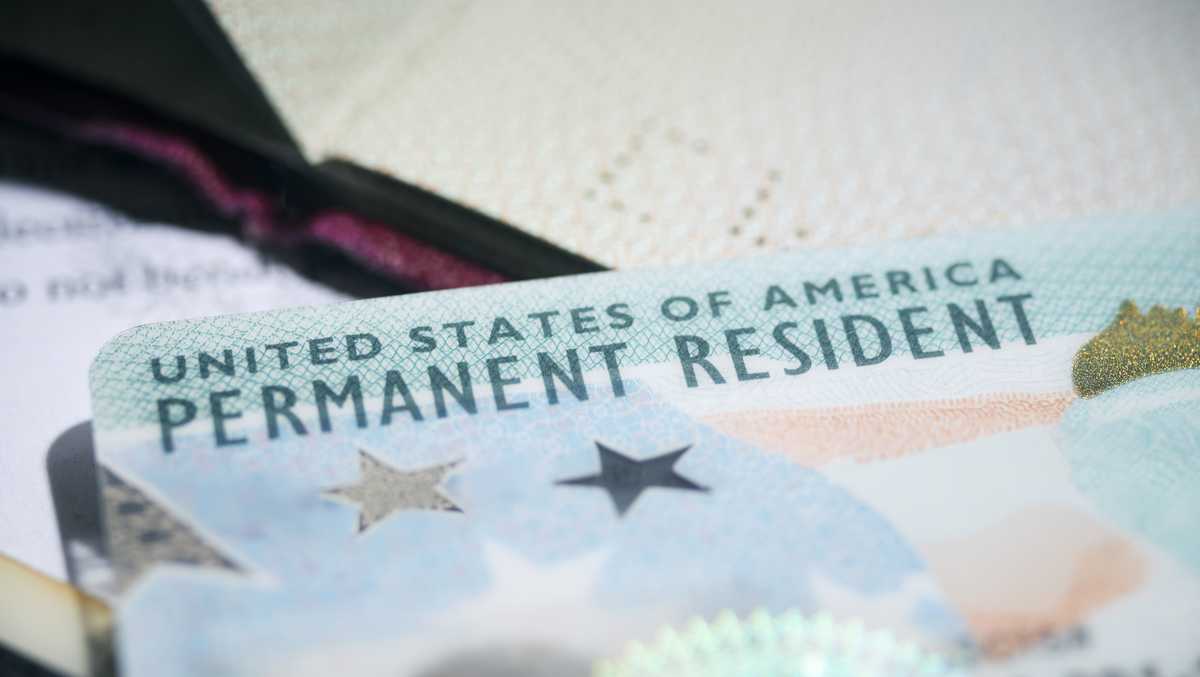
Trump Administration Mandates Green Card Applications from Abroad
The Trump administration’s new regulations, announced on Friday, will mandate that most green card applicants submit their applications from their countries of origin. This significant shift from longstanding practice could impact hundreds of thousands of individuals seeking permanent residency in the United States.
Historically, many individuals in the U.S. on temporary visas, including students and workers, have had the option to adjust their status while remaining in the country. Federal data reveals that over half of the more than one million green card approvals each year involve applicants already residing in the U.S.
With the implementation of this guidance, applicants must return to their home countries to apply for green cards at U.S. consulates through the State Department, barring exceptional circumstances.
U.S. Citizenship and Immigration Services (USCIS) spokesperson Zach Kahler stated that the system is designed for nonimmigrants—who visit the U.S. for limited periods and specific purposes—to exit the country upon conclusion of their stay. According to Kahler, allowing visa holders to initiate the green card process while in the U.S. is inconsistent with the fundamental intent of immigration laws.
USCIS asserts that the policy change will free up resources to address other pending cases and maintains that it reaffirms a return to the original objectives of immigration law.
The memo did not clarify whether applicants would need to remain in another country throughout the entire process or how existing applications might be affected. Immigration attorney Elizabeth Goss of Immigrants List cautioned, “There is no substantial policy rationale behind this move. It’s not a matter of security; these individuals have already undergone scrutiny for temporary nonimmigrant visas. This change will impact professionals across various sectors, including medicine and academia.”
Furthermore, under the current travel restrictions imposed by the Trump administration, 75 countries have suspended new immigrant visas. This complicates matters, as many individuals who leave may struggle to re-enter the U.S. Doug Rand, a former USCIS official, emphasized the impracticality of requiring individuals from over 100 banned countries to undergo consular processing abroad, highlighting the potential consequences of this directive.
