


Residents of Philadelphia, Pennsylvania, and nearby regions in South Jersey and Delaware are expressing their interest in more coverage from WHYY News as immigration issues continue to dominate discussions in these areas.
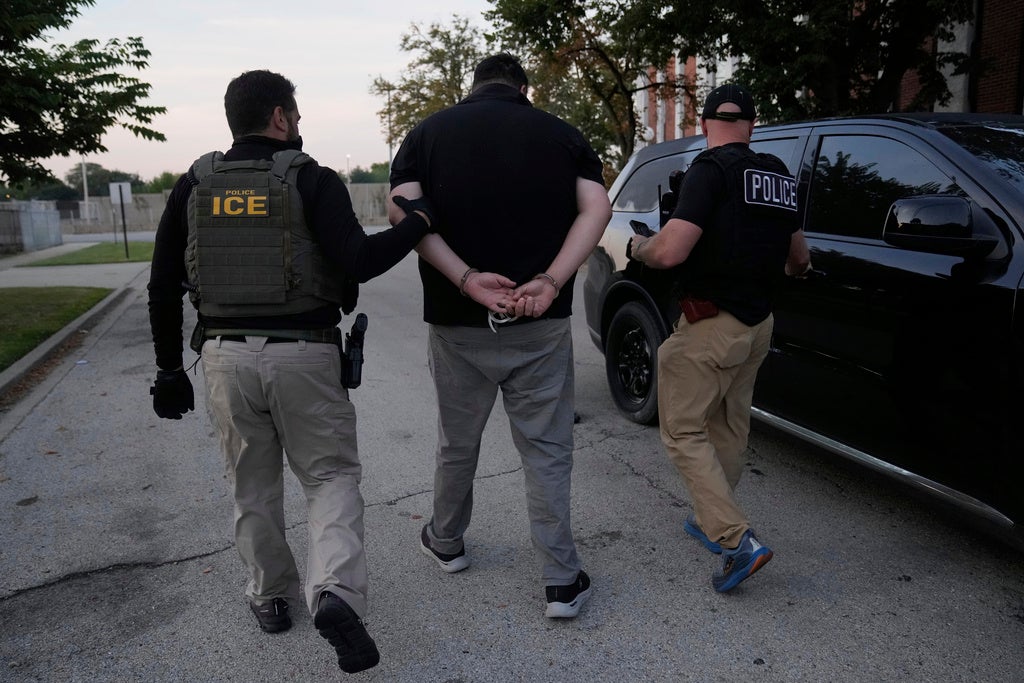
In the first 14 months of President Donald Trump’s second term, immigration arrests witnessed a dramatic increase in Pennsylvania, Delaware, and New Jersey. According to an analysis by the Associated Press, drawing from the Deportation Data Project at the University of California, Berkeley, Pennsylvania alone saw immigration arrests surge from 2,004 in the final 14 months of the Biden administration to 8,796 between January 20, 2025, and March 11, 2026.
Delaware experienced a more than threefold increase in immigration arrests during this same period. Meanwhile, New Jersey saw a noteworthy 159% rise in similar arrests over the past 14 months. Rankings indicate New Jersey stands eighth in the nation for immigration arrests, with Pennsylvania following closely in tenth place, solidifying their positions as two of the top states for these law enforcement actions between Trump’s inauguration and early 2026.
Pennsylvania hosts the Moshannon Valley Processing Center, the largest immigrant detention facility in the Northeast, with a capacity of 1,876 detainees. Additionally, New Jersey is home to Delaney Hall Correctional Facility, which ranks as the state’s largest immigrant detention center. Notably, there are currently no immigrant detention facilities in Delaware.
Surge in General Immigration Arrests Drives Numbers Up
Jennifer Lee, an associate professor at Temple University’s Beasley School of Law, notes that immigration arrests since Trump’s administration began in January 2025 can be classified into two distinct categories: those in the custody of the criminal justice system and those who are not. Historically, administrations have transferred individuals involved in the criminal justice system, facing civil immigration violations, into the custodial regulations of U.S. Immigration and Customs Enforcement (ICE).
The second type of arrests—unrelated to the criminal justice system—has become increasingly noticeable. These arrests encompass actions such as workplace raids, traffic stops, and apprehensions during court appearances or routine immigration appointments. By January 2026, the number of immigrants in detention peaked at around 73,000, a figure considered “unprecedented,” largely attributed to the Trump administration’s revised policies concerning detention eligibility.
Data from the Transactional Records Access Clearinghouse reveals that more than 70% of immigrant detainees have no prior convictions. Lee explains that previous administrations exercised greater discretion regarding the detention of individuals facing deportation proceedings. Under the current policies, a wider array of immigrants has become susceptible to incarceration.
Current regulations stipulate that individuals entering the U.S. without a visa must be detained, causing a dramatic surge in detentions. This need for immediate detention often accelerates the deportation process, as Lee explains that when individuals are detained, their cases can be resolved more swiftly.
Furthermore, Lee suggests that the increase in immigration arrests in Pennsylvania is partially attributable to a rise in cooperative agreements between local law enforcement and ICE, particularly through the federal agency’s 287(g) program.
