


Africa’s Digital Footprint and the Challenge of Representation on Wikipedia
Despite the expanding digital presence in Africa, the continent remains woefully underrepresented on Wikipedia, one of the world’s most frequented information platforms. Currently, Africa accounts for approximately 10 percent of Wikipedia’s total articles, yet less than 1 percent is dedicated to science and technology, according to Anusha Alikan, chief communications officer at the Wikimedia Foundation.
Only about 2 percent of Wikipedia’s editors hail from Africa, which poses significant challenges as the platform collects an astounding 50 billion contributions each month, reaching an audience of 15 billion people worldwide. Alikan emphasizes the need for African voices to shape digital narratives that influence global perceptions.
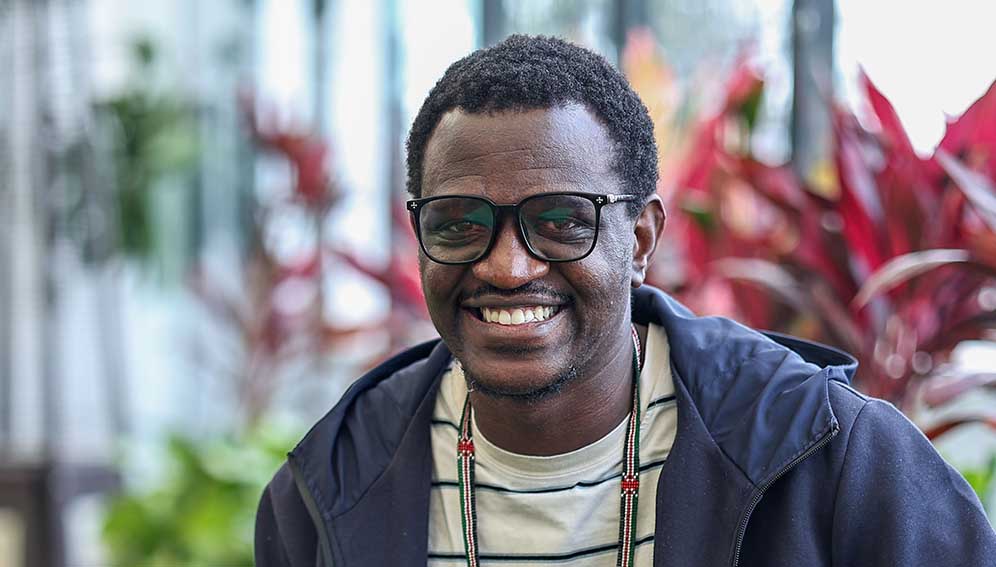
Eugene Agbor Egbe underscores the urgency of contributing to Wikipedia’s content
Cameroonian engineer and Wikipedia editor
From January to June 2025, sub-Saharan Africa recorded 178 million monthly page views on Wikipedia. However, this high consumption does not correspond with an increase in African-led content creation, highlighting a significant gap in representation.
Significance of African Contributions to a Global Knowledge Base
As a widely-used reference by students, journalists, and increasingly, artificial intelligence systems, Wikipedia’s role as an information source cannot be overstated. The lack of African entries threatens to render emerging technologies, particularly in AI, invisible in the global narrative. Egbe warns that if African contributions are overlooked, the continent risks becoming dependent on external narratives.
Job Mwaura, a cultural anthropologist at Ludwig-Maximilians-University in Munich, points to longstanding issues within Africa’s research systems. He argues that Western knowledge frameworks dominate, while local insights are often overlooked. This is compounded by insufficient funding for research initiatives, stymying Africa’s voice in global discourse.
Empowering Future Contributors through Training Initiatives
Recognized as Wikipedia’s 2025 Technology Contributor of the Year, Egbe has taken proactive steps to address this imbalance. He has trained over 1,000 engineers across five African nations to create articles that spotlight African innovators and scientific breakthroughs. He emphasizes that Africa’s representation on Wikipedia is not merely a question of visibility but a critical factor in survival in the rapidly advancing landscape of AI.
Egbe asserts that as AI continues to depend on expansive datasets, Africa’s absence could lead to an exacerbation of existing inequalities, leaving the continent behind in global technological advancements.
Diverse Languages as a Gateway to Knowledge Democratization
Africa’s rich diversity offers a unique opportunity to democratize knowledge through local languages. Wikipedia features 18 editions in various African languages, with Hausa, Igbo, Yoruba, Somali, and Zulu being the largest. This multilingual approach enables researchers to engage local communities effectively.
Furthermore, Wikipedia’s Kiwix tool offers offline access, aimed at reaching rural areas where internet connectivity is often unreliable. Alikan explains that contrary to misconceptions, Wikipedia acts as a secondary source that consolidates primary information. Researchers are encouraged to leverage this platform to make their work accessible to both local and global audiences.
Shifting Perceptions and Enhancing Contribution Rates
The perception of Wikipedia’s credibility has frequently been questioned, particularly among academics concerned about the quality of its open-source contributions. Mwaura acknowledges that previous critiques have negatively impacted its image and contributed to lower participation rates. However, he believes that shifting trends indicate an improvement, with both the community and reputable scientists now sharing reliable references.
For Egbe, there is an urgent call for greater participation from African scientists. He stresses the importance of not just consuming knowledge produced elsewhere but actively creating and sharing African narratives. The next generation must not find Africa missing from the digital archive that chronicles human history.
