


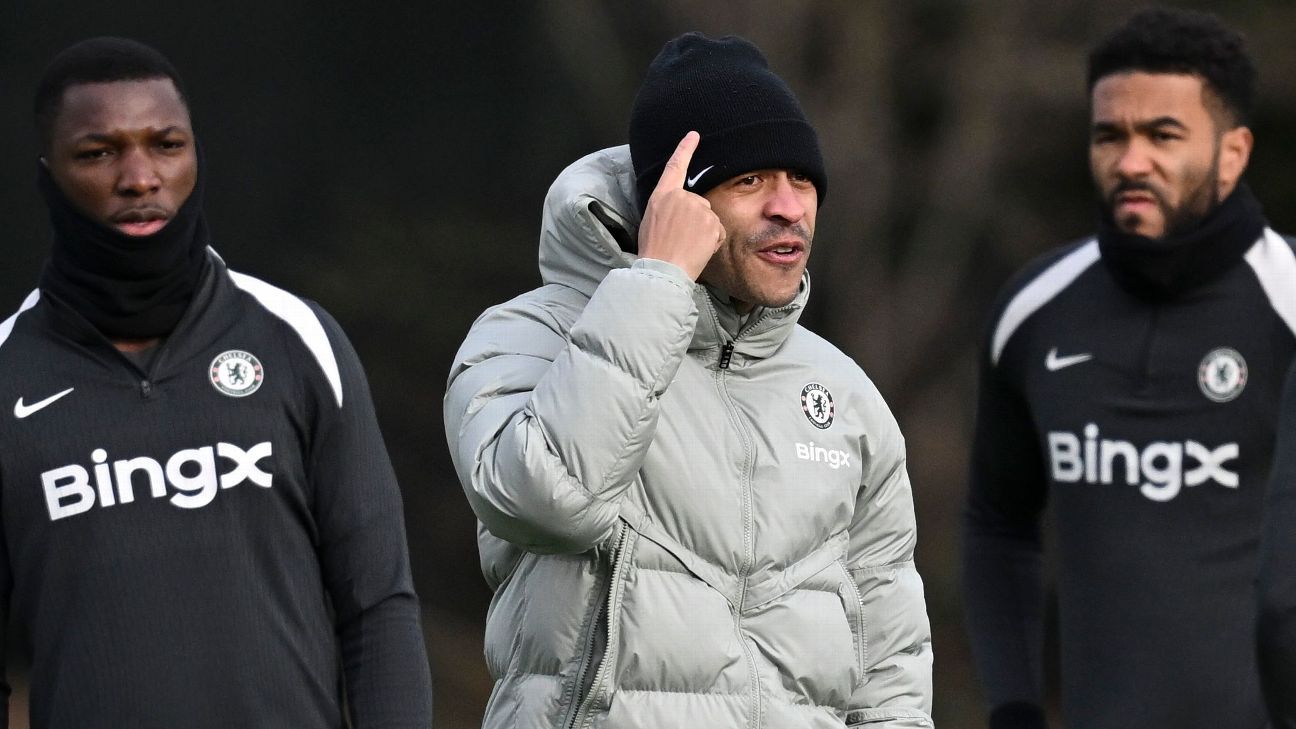
Chelsea Football Club recently terminated the contract of manager Liam Rosenior after just 106 days, leaving many within the organization and fanbase questioning the decision-making behind his appointment. Rosenior, whose tenure was marked by a struggle against the label of being a ‘yes man,’ was selected for the position largely due to his relationship with the club’s ownership, despite a resume that raised concerns about his readiness for such a high-profile role.
While Rosenior found success at Strasbourg under Bruco’s multi-club management model, fostering a deep understanding of its tactical framework, expectations at Chelsea proved to be markedly different. As the club’s leadership believed in his capabilities, skepticism among fans only grew, especially in light of a disheartening 3-0 defeat to Brighton & Hove Albion, which underscored a lack of genuine respect from the players towards their head coach.
Rosenior took the reins from Enzo Maresca in January, concluding his time with a disappointing record of 10 losses in 23 matches. This included an alarming streak of five consecutive Premier League defeats, a first for Chelsea since 1993, and the club’s first five-match stretch without scoring since 1912. As Chelsea languishes in eighth place, the prospect of failing to qualify for the UEFA Champions League looms dangerously large. With the FA Cup semi-final against Leeds United on the horizon, the pressure is palpable.
Leadership and Management Style in Question
Sources close to Rosenior described him to ESPN as polite, hardworking, and earnest, and many in the football community welcomed his hiring as a step towards diversifying leadership within the sport. However, concerns arose from his limited managerial experience—previous stints included a short interim position at Derby County, 18 months at Hull City, and his time at Strasbourg. Comments made by Rosenior, such as a puzzling definition of ‘management’ from an older interview that resurfaced during his tenure, only fueled skepticism about his abilities.
Initially adopting a communicative approach, Rosenior aimed to defend his players and highlight their potential but often became fixated on minor issues. This focus detracted from his authority, leading to mixed perceptions of his management style. Instances such as a controversial pre-match huddle and sideline note-taking during a substantial defeat only exacerbated the already fragile relationship with players, leaving many to question his capability to lead effectively.
Discipline and Player Relations
Despite a promising start where he led the club to victory in seven of their first nine games, Rosenior’s strategies soon came under scrutiny. His cautious tactics, particularly during a key Carabao Cup semi-final against Arsenal, led to doubts regarding his ambition among the squad. Internal discontent grew further when he attributed a recent dismal draw against Burnley to a stray assignment, failing to take swift action on the identified issues—resulting in discontent among players.
Information leaks became rampant, revealing tactical secrets—and even doubts from players like Enzo Fernandes about their futures at the club—only underscored the turbulence. With public sentiment wavering, questions arose regarding the club’s direction and the impact of sacking Maresca. Players openly expressed their concerns about the club’s leadership decisions, reflecting a growing divide between management and the squad.
Challenges of the BlueCo Model
The club’s recent troubles have raised critical questions about the effectiveness of the BlueCo ownership model, which emphasizes recruiting young talent on long-term contracts. Although Chelsea has previously celebrated significant titles, including the FIFA Club World Cup, the model has drawn criticism for limiting the head coach’s autonomy. The framework designed by co-owner Behada Egbali involves several sporting directors reinforcing a collaborative yet undermining structure, diluting the authority of the head coach.
Rosenior’s predecessors experienced friction under the same model, struggling to assert control over team matters as the parameters of their role adjusted over time. With Rosenior now gone, the challenge lies in discovering a suitable replacement who aligns with the BlueCo philosophy while also commanding the respect of the high-caliber squad.
As the search for Chelsea’s sixth permanent head coach since 2022 begins, potential candidates such as former AFC Bournemouth manager Andoni Iraola, Marco Silva of Fulham, and ex-Chelsea player Cesc Fabregas are on the table. The imperative for the club is to identify a head coach who can navigate the controlled environment of the organization while tapping into the requisite expertise needed for success.
In a landscape where long-term player contracts become a double-edged sword for coaching stability, a reevaluation of tactical recruitment processes may be vital. As Chelsea looks ahead, adjustments within both player acquisitions and managerial roles could be pivotal in regaining top-tier status on the football front.
