


In the autumn of last year, Chinese companies joined forces with government officials and business leaders from 16 African nations in Beijing to explore innovative solutions in off-grid solar energy, clean cooking technology, and electric mobility. This gathering aimed to identify feasible options tailored for local implementation.
This initiative was part of the Renewable Center for South-South Cooperation, designed to facilitate business partnerships, showcase technology, and promote skills transfer across developing regions.
Programs like this, established by the China Renewable Energy Industry Association (CREIA), signal a transformative phase in China’s renewable energy export strategy. According to China Energy News, while sales to emerging markets surged last year, exports to the European Union and the United States faced declines. Notably, solar panel shipments to Africa rose by 17%.
This shift can be attributed to strategic China-Africa cooperation policies, escalating energy demands across the African continent, and rising protectionist measures in traditional export markets. Additionally, industry associations and research institutes are collaborating to turn potential prospects into actionable plans.
The Renewable Energy Center Program is a cornerstone of the China-Africa Renewable Energy Partnership, established in 2024 through collaboration among industry associations from China, Kenya, Ethiopia, and Rwanda, supported by the World Resources Institute (WRI). CGTN Africa highlights the ambitious objectives of this partnership, including transforming energy access across Africa, aiding local businesses with cost-effective energy solutions, and generating green jobs.
Dialogue Earth conducted interviews with various officials to shed light on the dynamics of this cooperation.
African Demand Meets Chinese Supply
CREIA plays a pivotal role in the partnership. Li Dan, the association’s executive director, pointed out that unlike industrialized nations that grapple with phasing out traditional fossil fuel systems, many regions in Africa are positioned to leap directly to clean energy solutions. “Africa can avoid the pitfall of polluting first and cleaning up later,” she explained, emphasizing the potential for rapid adoption of distributed solar power and energy storage.
Rugare Mukanganga, an analyst at the Zimbabwe-based consulting firm Development Reimagined, echoed this sentiment. He noted that as manufacturing and industry expand across Africa, energy demands are set to rise significantly. “Closing these energy gaps is crucial. With increasingly competitive pricing in renewable energy, now is the time to prioritize clean technologies and sustainable infrastructure,” he explained.
The impetus for fostering China-Africa energy collaboration emerged during the COP27 climate summit in Egypt in 2022, where CREIA recognized the potential to address Africa’s energy needs. However, Li Dan cautioned that aligning supply with local demand is far from straightforward. Many African nations lack the foundational elements necessary for market operation. “At various development stages, advanced technology may not be the right solution, as it can be prohibitively expensive or unsupported by the required infrastructure,” she added. She emphasized that effective communication and coordination are necessary to tailor Chinese offerings to meet Africa’s unique needs.
Bridging the Information Gap
Access to accurate information is pivotal for informed international investments.
Lugale Mkanganga highlighted a common misconception regarding energy access across African nations. “Approximately 20 countries generate over half of their electricity from renewable sources, minimizing urgency in the energy transition for a further 35 countries,” he noted. Understanding local contexts is essential for Chinese companies to make well-informed decisions about their service offerings.
The partnership is actively compiling quarterly reports for Chinese businesses and investors, monitoring policy changes and investment environments in Kenya, Rwanda, and Ethiopia. Regular business trips to Africa also provide opportunities for Chinese firms to connect with local partners and project managers.
This shift in approach reflects an evolving mindset. Les Dan observed that many Chinese firms initially believed they had to offer renewable solutions at rock-bottom prices. However, analysis revealed that commercial electricity prices in Kenya and Rwanda range from 1.50 to 2.00 yuan (US$0.22 to 0.29) per kilowatt-hour, which is considerably higher than prices in China, indicating greater purchasing power than previously assumed. Furthermore, partnerships with trustworthy private companies can sometimes prove more fruitful than engagements with government entities.
In turn, African nations are increasingly aware of the opportunities presented by Chinese technologies. Yemissirach Sisay, chair of the Ethiopian Solar Energy Development Association and a founding member of the partnership, emphasized that a majority of Ethiopia’s solar equipment is imported from China. She noted that many Chinese firms in Ethiopia operate independently, and strengthening collaboration among these companies is a focal point of the partnership.
Deploying Technology and Skills Where They’re Needed
Participating countries are keen on technology and skills transfer, where foreign partners share knowledge and capabilities, enabling local firms to develop similar technologies independently. Both Yemisilaku Sisay and Rugare Mkanganga identified a critical shortage of skilled engineers in their nations.
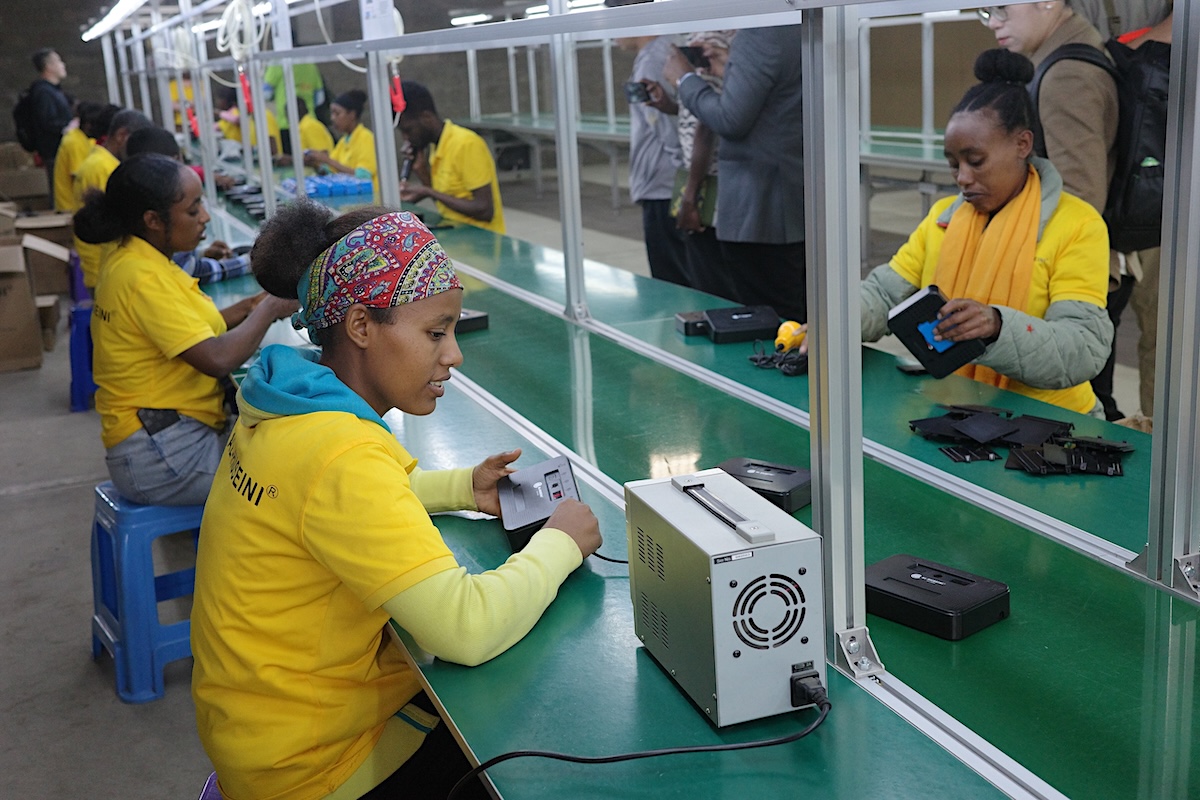
The partnership aims to address this gap by establishing initiatives such as Forever TVET, a vocational school set up by the Chinese firm Beijing Henghua in Rwanda. The school offers renewable energy courses alongside practical demonstrations, equipping students with skills in electrical engineering and power plant management applicable within their communities.
This approach also fosters the development of localized solutions. For example, a battery swapping station for electric bikes was installed to meet local demands, demonstrating a sustainable use case for Chinese technology.
However, transferring advanced techniques remains more challenging than imparting skills. Li Dan identified issues stemming from fragmented supply chains and stressed that while there are calls for full localization, the market’s scale might not justify creating local production solely for solar panel manufacturing.
Lugale Mkanganga argued that transitioning from “assembled in Africa” to “made in Africa” would require nurturing and supportive policies from governments, as well as collaboration between private industries and governmental bodies.
Financial Challenges in Development
Funding presents a persistent challenge within international development and energy transition efforts. Chang Cheng pointed to exchange rate volatility and an uncertain policy climate as factors complicating investment prospects in Africa.
“High capital costs restrict many growth opportunities across the continent,” noted Lugale Mkanganga. The majority of available financing comes with steep borrowing costs and minimal risk-sharing frameworks, potentially undermining the business viability of local manufacturing projects.
Yemissirach Sisay highlighted the obstacles presented by international financing on commercial investments. Concerns about funds supporting more capable Chinese contractors over local manufacturing, alongside stringent lending criteria from organizations like the World Bank, can inhibit access to capital for smaller enterprises.
In response, partnership members proposed a restructured financing system. Zhang Cheng indicated that hybrid financing could bridge the gap, with public funds and philanthropic organizations taking on initial risks to catalyze larger private investments.
There is a pressing need to craft projects that are deemed “bankable,” according to Li Dan, who noted the importance of elevating Africa’s vast energy requirements into commercially viable ventures through comprehensive capacity-building initiatives encompassing project design, risk assessment, and sustainable business models.
Lugale Mkanganga asserted that African start-ups require long-term capital to foster industry development rather than short-term profits, emphasizing the need for “patient” funds. He believes fostering cooperation between African and China-led multilateral financial institutions could enhance the availability of funds, especially in support of Africa’s Agenda 2063, which aims at promoting sustainable growth, regional integration, and infrastructure development.
Zhang Cheng revealed that new partnerships focused on innovative financing mechanisms are already underway, with WRI and its collaborators launching three initiatives aimed at matching trade and investment while enhancing capacity development and creating a funding platform.
