


Call for Foreign Financing Sparks Infrastructure Debate
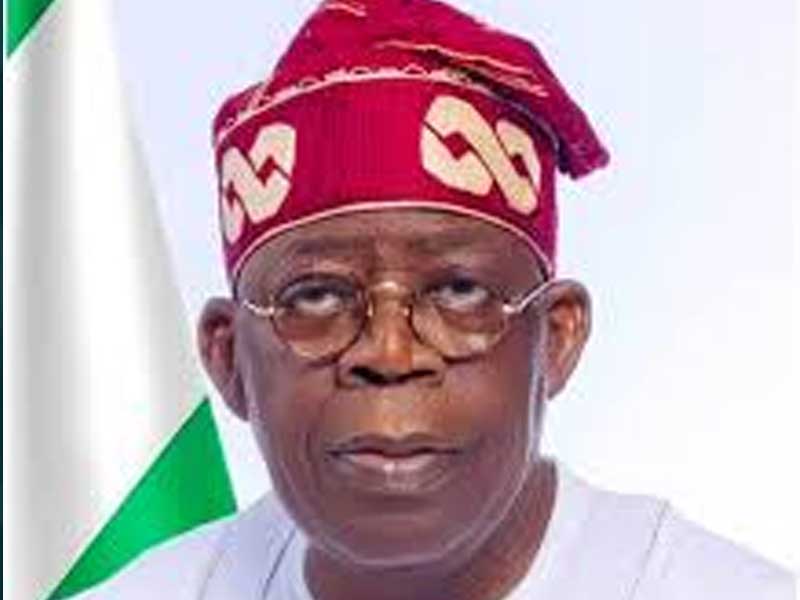
President Bola Tinubu’s request for $516.3 million in foreign financing to develop the Sokoto-Badagry expressway has reignited discussions on infrastructure funding and debt sustainability. Critics, including former Vice President Atiku Abubakar and Kano’s 16th Emir, Muhammadu Sanusi II, caution against increased borrowing that could burden Nigeria’s fiscal health, as reported by Sunday Aborisado.
Formal Request for Legislative Approval
The President’s formal submission to the National Assembly for a $516.3 million foreign syndicated loan underscores Nigeria’s enduring struggle with infrastructure financing. This request, made to the Senate last Thursday, aims to facilitate a financing arrangement via Deutsche Bank, underpinned by a partial risk guarantee from the Islamic Corporation for the Insurance of Investment and Export Credit. The proposal seeks legislative endorsement for the financing to be included in the federal borrowing program, allowing for the implementation of the first 120 kilometers of the expressway project.
Vision for the Sokoto-Badagry Super Highway
Spanning approximately 1,000 kilometers, the Sokoto-Badagry Super Highway is designed as a vital corridor that will connect Sokoto, Kebbi, Niger, Kwara, Oyo, Ogun, and Lagos states, stretching from Irela in the far northwest to Badagry along the Atlantic coast. The project aims to create a high-capacity roadway with future rail integration and public infrastructure provisions, positioning it as a flagship initiative under the “New Hope” agenda of the current administration.
Projected Benefits for Trade and Food Security
Government officials project that the expressway will significantly reduce travel time between Sokoto and Lagos, improve road safety, decrease logistics costs, and boost trade, particularly for agricultural products. By linking production hubs in the north with southern markets and ports, the project aims to enhance food security and foster national integration, two critical factors for Nigeria’s economic growth.
Legislative Response and Initial Deliberations
Initial deliberations in the Senate reveal strong support for the project. Senator Adam Ariello characterized it as groundbreaking, noting it has been in planning for over 50 years, with construction already underway in some areas. He highlighted the use of reinforced concrete technology and solar-powered lighting as evidence of compliance with modern infrastructure standards, emphasizing the transformative effects the highway could have across multiple regions. Senate President Godswill Akpabio echoed these sentiments, describing the superhighway as a potential economic game-changer that could enhance productivity and save lives.
Concerns Over Debt Sustainability
Despite the optimistic outlook from some lawmakers, the borrowing proposal has attracted fierce criticism from prominent political and business figures, reflecting deep concerns about Nigeria’s growing debt levels and fiscal trajectory. Recent newspaper reports indicate that Nigeria’s total public debt reached approximately 159.28 trillion Naira (about $110.3 billion) as of December 31, 2025, resulting in an average debt burden of 724,000 Naira per capita. This figure, significantly impacted by a weak naira and new borrowing, predominantly stems from federal government obligations.
Voices of Caution Amid Infrastructure Ambitions
Former Vice President Atiku Abubakar has emerged as a leading critic, warning that unchecked borrowing, without corresponding revenue increases, could heighten fiscal vulnerabilities. He asserts that while infrastructure development is crucial, it must occur within a framework prioritizing efficiency, transparency, and clear economic pathways. Similarly, Emir Muhammadu Sanusi II, a respected economist, emphasizes the importance of productive investments that will yield returns sufficient to service any debt incurred. He calls for a more disciplined approach to public finances, noting that poor revenue performance and increasing debt servicing could limit the government’s capacity to fund essential services and invest in human capital.
