


Concerns Over Political Entry Costs in Nigeria
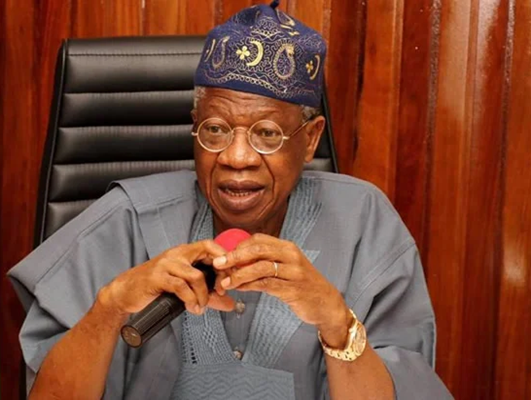
Lai Mohammed, the former Minister of Information and Culture, has raised alarms regarding the prohibitive costs associated with running for political office in Nigeria. He argued that these financial barriers particularly hinder the participation of young people in the political arena.
Discussion at the London School of Economics
Speaking at the London School of Economics and Political Science recently, Mohammed addressed various topics related to the legacy of former President Muhammadu Buhari and shared insights from his new book, “Headlines and Soundbites: Media Moments that Defined the Administration.”
High Costs Compared to Global Standards
In a response to inquiries regarding political accessibility in Nigeria, he acknowledged that the expenses tied to election campaigns in the country are substantially higher than in many other parts of the world. He emphasized that while the political landscape is open to ambitious youth, the financial demands create significant obstacles.
Breaking Down Election Costs
Mohammed detailed the financial requirements for various political offices, indicating that presidential candidates might spend up to 100 million naira, which includes 70 million naira for the nomination form and an additional 30 million naira for the expression of interest form. He noted that governorship candidates face approximately 50 million naira in costs, while those running for senatorial positions encounter around 20 million naira.
Financial Structure of Political Parties
He attributed these high costs to the financial mechanisms employed by political parties, which depend heavily on election periods for revenue generation. Mohammed elaborated, stating that the system necessitates significant funds simply to participate in election campaigns, contrasting it with practices in countries like the UK where membership dues are more common.
Encouraging Trends Among Young Politicians
Despite the financial burdens, Mohammed observed that young Nigerians continue to make impactful strides within the political landscape. He asserted that many young individuals without traditional political backgrounds are successfully navigating governance and public service roles in Nigeria.
Enhancing Government Communication
Reflecting on his tenure, Mohammed highlighted his commitment to fostering improved communication between the government and citizens through more engaging methods. He underscored the importance of thematic town hall meetings and ministerial scorecards in enhancing public participation and accountability.
Balancing Policy and Public Engagement
He stressed that effective governance requires an equilibrium between implementing policies and fostering public understanding. In today’s fast-paced, information-driven environment, he pointed out that policies must be conveyed clearly and meaningfully to truly resonate with the populace. He noted that managing public perception is as crucial as dealing with tangible realities, and this alignment fosters trust and enhances national progress.
