


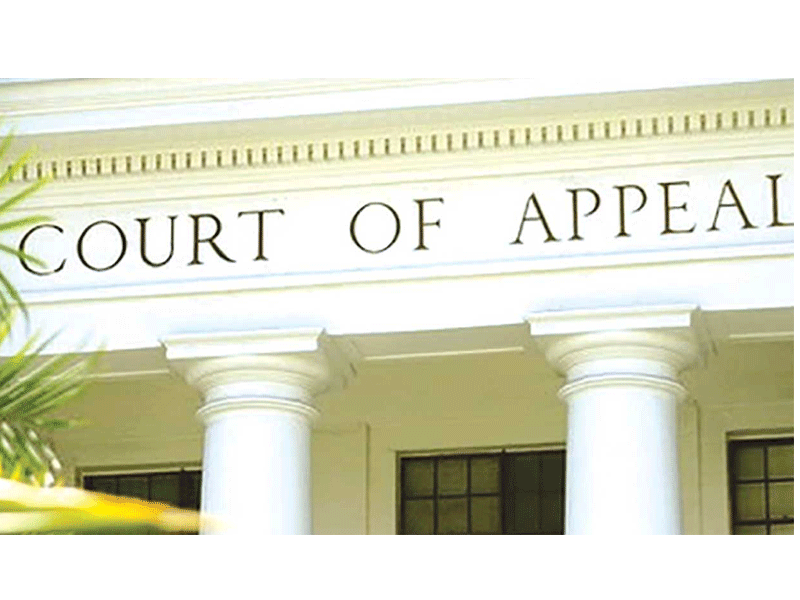
Court of Appeal Judges Convene in Lagos to Enhance Understanding of Banking Liquidation
Judges from the Court of Appeal gathered in Lagos for an awareness seminar designed to improve their understanding of the bank liquidation process, the protection of depositors, and the intricacies of financial sector litigation in Nigeria.
Seminar Focused on Enhancing Bank Clearing and Depositor Protection
Organized by the Nigeria Deposit Insurance Corporation (NDIC) in partnership with the National Institute of Justice (NJI), the seminar was themed “Strengthening the effectiveness of bank clearing and protection of depositors.” The event aimed to foster a better relationship between the judiciary and financial sector regulators.
Judiciary’s Role in Banking Disputes Emphasized
Speakers at the event underscored the judiciary’s crucial role, particularly that of the Court of Appeal, in resolving disputes within the banking sector. Their contributions are vital in shaping financial jurisprudence and maintaining public trust in Nigeria’s banking system.
Focus on National Importance of Financial Institution Stability
Opening remarks by NJI Chief Justice Babatunde Adejumo highlighted the program’s objective to enhance institutional understanding between judicial bodies and financial regulators. He emphasized that the stability of financial institutions is a matter of national significance, as it relies heavily on public trust in both the institutions and the legal frameworks governing them.
Implications of Financial Institution Failures
Justice Adejumo cautioned that failures of financial institutions can have profound effects on depositors, creditors, businesses, and the economy at large. “The banking system functions effectively when there is trust in the institutions that support it and the legal processes that govern its operations,” he stated, stressing that disruptions can diminish public confidence in the overall financial system.
Challenges in Bank Liquidation Proceedings
During the seminar, NDIC Managing Director and CEO Thompson Aldea, represented by Executive Director of Corporate Services Emily Osuji, noted that the effectiveness of liquidation and distress resolution processes heavily relies on the quality and timeliness of judicial decisions. He pointed out that complexities such as hidden assets, weak collateral, competing creditor claims, and sophisticated financial transactions complicate the liquidation of failed banks in Nigeria.
Protracted Litigations Hinder Liquidation Processes
Aldea described the liquidation process as often fraught with challenges, such as insiders hiding assets prior to bank closures, or poorly collateralized loans. He warned that prolonged litigation over issues related to rights, contractual obligations, and asset recovery could delay liquidation procedures and further weaken public confidence in the banking sector. He advocated for sustained collaboration between the judiciary and regulators as financial transactions evolve.
Sound Judicial Decisions as a Pillar of Economic Stability
Emphasizing the need for effective judicial outcomes, Aldea referenced international standards established by the Basel Committee on Banking Supervision and the International Association of Deposit Insurers, both of which stress the importance of a robust legal system and an independent judiciary in resolving financial disputes. In her opening remarks, President of the Court of Appeals, Monica Domban Mensem, represented by Ali Abubakar Banandi, praised the seminar as a vital collaboration aimed at enhancing judicial comprehension of financial institution disputes, affirming that these interactions have positively influenced judges’ decision-making capabilities.
