


Dangote Highlights Opposition to Nigeria’s $20 Billion Oil Refinery Project
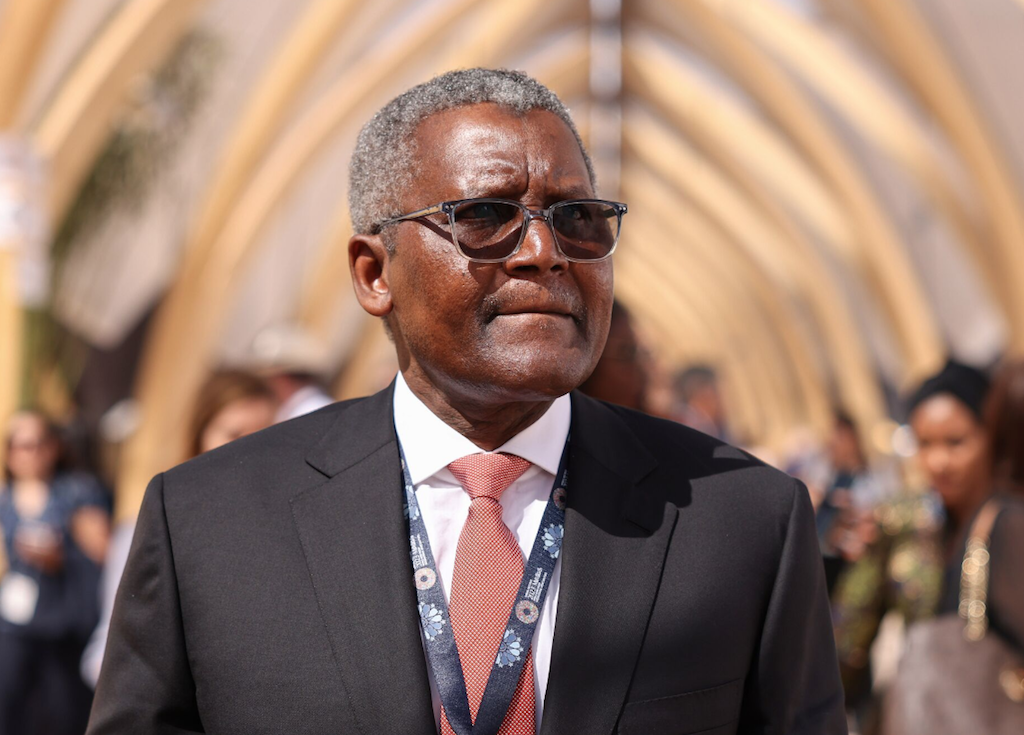
Aliko Dangote, recognized as Africa’s wealthiest individual, has shed light on the significant obstacles faced during the development of a $20 billion oil refinery in Nigeria. He referred to entrenched interests benefitting from the nation’s fuel import and subsidy system as a formidable “mafia” committed to preserving their profitable arrangement.
The resistance, according to Dangote, primarily stems from traders, shippers, and local beneficiaries who perceive the new refinery as a threat to their lucrative earnings. These individuals are entrenched in Nigeria’s long-established oil subsidy system, which has historically favored a select few.
During a conversation with Nicolai Tangen, CEO of the Norwegian Sovereign Wealth Fund, Dangote highlighted how these vested interests have been hindering progress on project sites, delaying the commencement of refinery operations. He noted, “All this would have been blocked by the so-called mafia in the oil business so that we would not come and address these issues.”
Securing land for the refinery proved to be a protracted process, with five years spent negotiating the necessary approvals. Dangote experienced delays of three-and-a-half years in one location and another year-and-a-half in a different site due to the efforts of stakeholders aiming to obstruct the initiative.
Despite these challenges, Dangote remained resolute, emphasizing the team’s commitment to the project. “We didn’t flinch at all. We were really focused. We knew what we were doing,” he asserted. He pointed out that Nigeria, despite being a significant crude oil producer, has historically relied on importing refined petroleum products, resulting in economic detriment and substantial enrichment for a select group.
The annual subsidy payments alone reach nearly $10 billion, enriching a few traders and shippers while burdening the economy. “Nigeria was giving out about $10 billion every year in subsidies,” he remarked. “The people who were actually benefiting were… shippers making huge profits, traders making huge profits.” He emphasized that smaller entities also exploit the allocation of local products within the subsidy framework.
The construction of the refinery necessitated the development of entirely new port facilities and supporting infrastructure, employing around 67,000 people throughout the process. Dangote acknowledged that the project has evolved into a much larger and more complex endeavor than initially anticipated, but emphasized that abandoning it was never on the table.
Refinery’s Impact on Nigeria’s Oil Market
Using a metaphor reminiscent of navigating treacherous waters, Dangote explained the ongoing challenges faced during the refinery’s construction. “When you get to the middle of the ocean, you see that the current is bad. It’s bad going forward and bad going backward. So you have to move forward,” he elaborated.
Notably, the refinery has already altered the market dynamics, substantially diminishing the power of companies reliant on imports and subsidy payments. Currently, it sources over half of its crude oil from domestic suppliers while also importing from Angola, Libya, and the United States. “We source about 56% from Nigeria and some from Angola. We buy a significant amount from Angola, we buy from Libya and we also buy from the United States,” he detailed, noting a shift from importing large quantities of WTI crude from the U.S. to securing more Nigerian crude.
In terms of scale, the refinery is currently purchasing 21 cargoes of oil from Nigeria monthly, with plans to expand significantly. “Within the next 30 months, it’s going to be 1.4 million barrels a day. That’s a huge amount,” he said, indicating the ambitious growth trajectory planned for the facility.
